Ux Portfolio Tips For Beginners
The digital design landscape is booming, and for aspiring UX designers, a portfolio isn’t just a nice-to-have – it’s your indispensable calling card. It’s the visual narrative of your design journey, a testament to your skills, process, and potential. For beginners, crafting a compelling UX portfolio can feel like a monumental task, often leading to questions like: “What projects should I include?” or “How do I even start documenting my process?” Fear not! This comprehensive guide from Layout Scene will equip you with the foundational strategies and actionable UX portfolio tips to build a collection of work that truly stands out, even if you’re just starting your exciting UX adventure.
Understanding the Goal: Why Do You Need a Portfolio?
Before you even think about which projects to include, it’s crucial to understand the true purpose of a UX portfolio. It’s far more than just a collection of pretty screens or finished designs. A successful portfolio is a strategic tool designed to:
- Prove Your Problem-Solving Ability: Recruiters want to see that you can identify user problems and craft thoughtful, effective solutions. Your portfolio demonstrates your logical thinking and strategic approach to design challenges.
- Tell Your Unique Story: Who are you as a designer? How do you think? What values drive your design decisions? Your portfolio communicates your unique perspective, methodology, and the value you bring to a team.
- Showcase Your Design Process: The “how” is often more important than the “what.” Hiring managers are keen to see your design process, from initial research and ideation to iteration and testing. This reveals your methodological rigor and understanding of UX principles.
- Differentiate Yourself: In a competitive market, your portfolio is your chance to shine and stand apart from other candidates. It highlights your specific strengths, interests, and potential.
- Reflect Your Understanding of UX Principles: A well-structured portfolio subtly communicates your grasp of user-centered design principles, information architecture, usability, and interaction design.
Think of your portfolio as a guided tour through your design mind, illustrating not just what you’ve created, but how you create it, and why your creations matter.
Quality Over Quantity: Showcase Your Best Work
One of the most common pitfalls for beginner UX designers is feeling the need to include every single project they’ve ever touched. Resist this urge! When it comes to your UX portfolio, less is often more. A carefully curated selection of 2-3 strong, well-documented projects will always outperform a sprawling collection of ten weaker ones.
Here’s how to approach selecting your projects:
- Focus on Diversity: Choose projects that highlight a diverse range of UX skills. This could mean one project emphasizing deep user research, another showcasing complex information architecture, and a third demonstrating strong interaction design and prototyping.
- Consider All Project Types: Don’t feel limited to “real-world” client work. Many successful portfolios feature:
- Personal Projects: Addressing a problem you genuinely care about, giving you full creative control.
- Redesigns: Taking an existing app or website and applying your UX knowledge to improve it.
- Bootcamp/Course Projects: These are excellent foundations, just be sure to add your personal insights and expand on the process.
- Hypothetical Projects: If you lack direct experience, invent a realistic problem and design a solution. The process is what matters.
- Clearly Define Your Role: If a project was a team effort, be explicit about your specific contributions. Did you lead the user research? Were you responsible for wireframing a specific flow? Honesty and clarity are paramount.
- Emphasize Impact: Even for hypothetical projects, consider the potential impact of your design. How would it improve user experience? What metrics might it affect?
The Art of Storytelling: Case Studies That Captivate
This is arguably the most critical component of your UX portfolio. Recruiters and hiring managers spend the vast majority of their time delving into your case studies. This is where you transform a project into a captivating story, detailing your journey from problem discovery to solution implementation. A strong case study isn’t just a recount; it’s a persuasive argument for your design capabilities.
Here’s a recommended structure for impactful UX case studies:
- Project Overview:
- Project Title: Clear and concise.
- Your Role: e.g., UX Designer, UX Researcher.
- Timeline: Duration of the project.
- Key Challenge/Problem Statement: What was the core problem you aimed to solve?
- Solution/Outcome: A brief high-level summary of your solution and its impact.
- The Problem: Deep dive into the user problem you’re addressing. Provide context. What pain points existed? Why was this problem important to solve?
- Research & Discovery: Detail how you understood the problem and your users.
- Methods: User interviews, surveys, competitive analysis, heuristic evaluation, market research.
- Deliverables: Personas, user journey maps, empathy maps, affinity diagrams.
- Key Insights: What did you learn that informed your design decisions?
- Ideation & Design: Explain your process for moving from insights to solutions.
- Methods: Brainstorming, sketching, user flows, information architecture, wireframing (low-fidelity to high-fidelity), prototyping.
- Design Decisions: Articulate why you made specific design choices, connecting them back to your research insights and user needs.
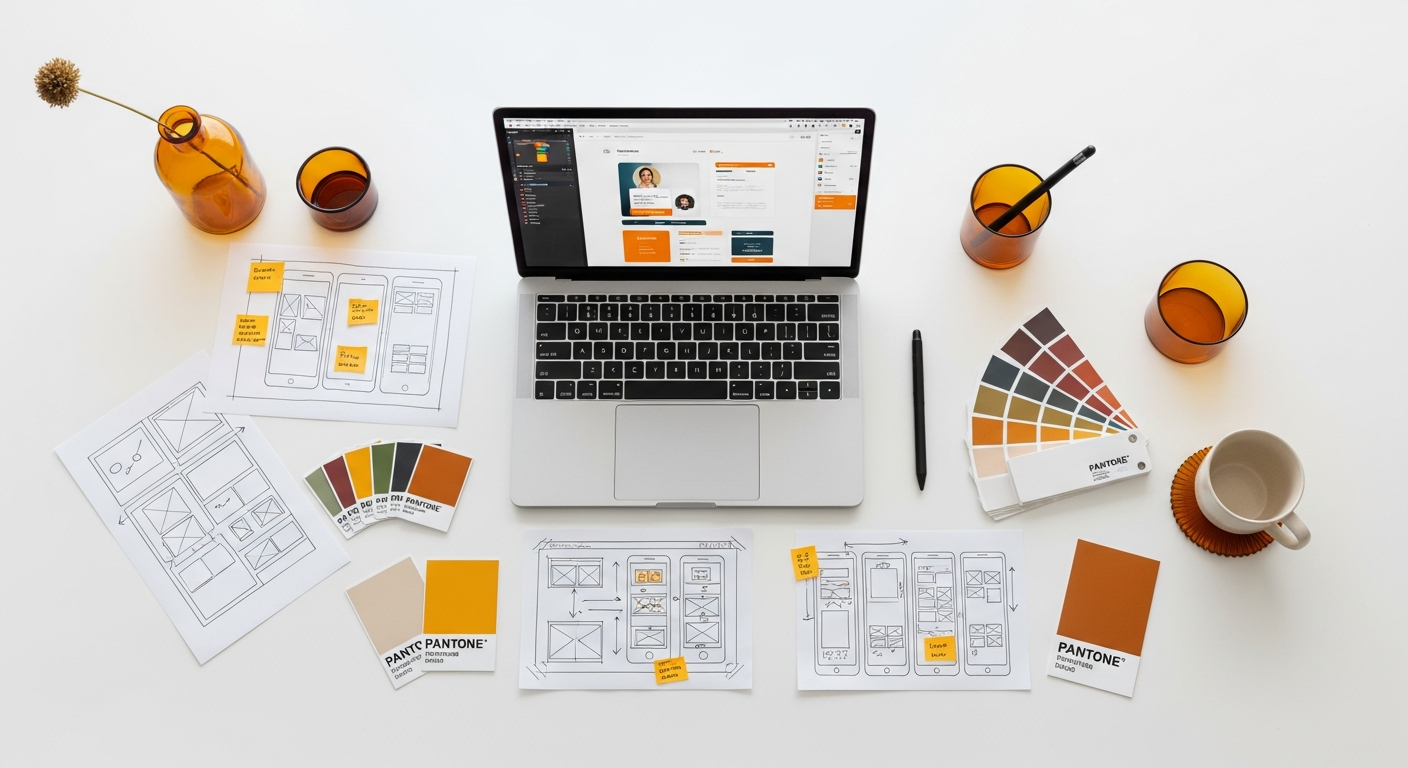
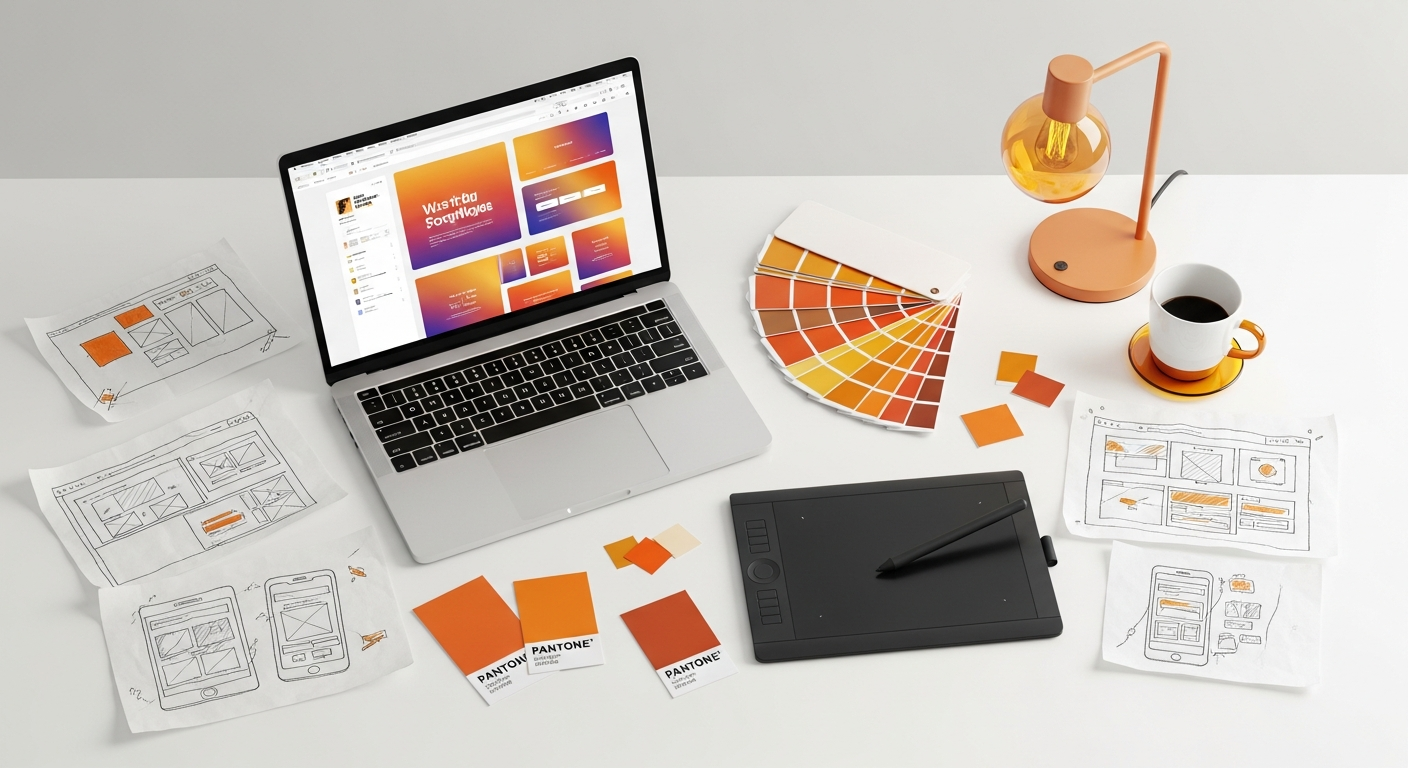
- Visuals: Show your work! Include sketches, wireframes, user flow diagrams, and prototypes. Annotate them to explain their purpose.
- Testing & Iteration: How did you validate your designs and make improvements?
- Methods: Usability testing, A/B testing, peer reviews, heuristic evaluations.
- Feedback & Changes: Document key feedback received and how you iterated on your designs. Showing how you incorporated feedback demonstrates adaptability.
- Solution & Impact: Present the final design. What was the outcome?
- Visuals: High-fidelity mockups of key screens.
- Measurable Impact: If possible, include metrics (e.g., increased conversion, reduced task time). For hypothetical projects, discuss potential impact or how you would measure success.
- User Feedback: Quotes from users.
- Learnings & Next Steps: Reflect on the project. What did you learn? What would you do differently next time? This shows self-awareness and a growth mindset, qualities highly valued by employers.
Throughout your case study, use clear, concise language. Avoid excessive jargon and always prioritize explaining your thought process over simply displaying a final product.
Tailor Your Portfolio: Know Your Audience
A “one-size-fits-all” portfolio rarely achieves maximum impact. Just as you design products for specific users, you should design your portfolio for specific audiences – the recruiters and hiring managers at the companies you’re targeting. This doesn’t mean creating a completely new portfolio for every application, but rather intelligently customizing what you present and how you present it.
Consider these points for effective tailoring:
- Research the Company and Role: Dive deep into the company’s products, services, mission, and values. Scrutinize the job description for specific keywords, required skills (e.g., “strong in user research,” “experience with design systems”), and team dynamics.
- Prioritize Relevant Projects: If a job emphasizes e-commerce UX, make sure your strongest e-commerce-related project (or one demonstrating transferable skills) is front and center. Reorder your case studies to highlight the most pertinent work first.
- Highlight Specific Skills: Within your case studies, subtly emphasize the skills the job description asks for. If they want strong prototyping skills, ensure your prototypes are clearly visible and well-explained. If they value user interviews, elaborate on your research methods.
- Show Your Personality (Professionally): While maintaining professionalism, let your unique voice and passion for UX shine through. Your “About Me” section is a great place for this. Companies hire people, not just skillsets, and demonstrating a cultural fit can be a significant advantage.
- Craft a Compelling “About Me” Page: Beyond a resume, this page offers a chance to share your design philosophy, what excites you about UX, and perhaps a personal touch that makes you memorable. Connect your passions to your design approach.
Think of your portfolio as a dynamic entity. With a little strategic adjustment, you can significantly increase its resonance with your desired employers.
Technical Details Matter: Presentation and Accessibility
Your UX portfolio itself is a testament to your design skills, not just the projects within it. Its presentation, usability, and accessibility directly reflect your understanding of user experience principles. Don’t let a poorly designed portfolio undermine your impressive work.
- Choose the Right Platform:
- Dedicated Website: Platforms like Webflow, Squarespace, Semplice, or even custom HTML/CSS offer maximum control over branding and layout. This is often preferred.
- Behance/Dribbble: Excellent for visibility and community, but offer less customization for comprehensive case studies. Can be good as supplementary platforms or for visual showcases.
- Strive for Visual Design Excellence: Your portfolio should be clean, intuitive, and visually appealing. Use a consistent aesthetic, clear typography, and a sensible color palette. It should reflect your design taste.
- Ensure Mobile Responsiveness: This is non-negotiable. Many recruiters will review portfolios on tablets or smartphones. Your site must adapt gracefully to various screen sizes.
- Prioritize Clear Navigation: Make it effortless for visitors to find your projects, specific case studies, your “About Me” page, and your contact information. A logical structure and intuitive menu are key.
- Proofread Meticulously: Typos, grammatical errors, and awkward phrasing can severely undermine your professionalism. Read your content aloud, and enlist a fresh pair of eyes (a friend, mentor, or even a professional editor) to review everything.
- Optimize for Loading Speed: Large, unoptimized images can significantly slow down your site, leading to a frustrating user experience. Compress images without sacrificing quality.
- Consider a PDF Version (Optional): While a live website is ideal, some companies might request a PDF version for initial screening. Ensure this version is also well-formatted, easy to read, and concise.
A polished, user-friendly portfolio demonstrates your attention to detail and commitment to delivering excellent experiences, even when the user is a busy hiring manager.
Continuously Evolve: Your Portfolio is a Living Document
Your UX portfolio is not a static artifact to be created once and then forgotten. It is a dynamic, living document that should evolve as you grow, learn, and gain new experiences. Embrace the iterative nature of design by applying it to your own portfolio.
- Actively Seek Feedback: Be open to constructive criticism. Share your portfolio with mentors, fellow designers, and even non-designers. What’s clear to you might not be clear to others. Use this feedback to refine your narratives and presentation.
- Update Regularly: As you complete new projects, acquire new skills, or simply gain a deeper understanding of UX, integrate these changes into your portfolio. Don’t hesitate to remove older, weaker work that no longer represents your best capabilities.
- Document Everything: Get into the habit of documenting your design process from day one on any project, whether personal or professional. Take screenshots, jot down insights from meetings, save early sketches and wireframes. This makes updating your portfolio significantly easier and ensures you capture the “why” behind your decisions.
- Reflect and Improve: Each time you review or update your portfolio, take a moment to reflect. Are you articulating your value effectively? Are your case studies truly showcasing your process? What story are you trying to tell, and is it coming across clearly?
- Stay Current with Trends: While fundamentals remain, presentation styles and common expectations for portfolios can shift. Stay aware of what other successful designers are doing and how they are presenting their work, adapting your own approach where appropriate.
By treating your portfolio as an ongoing project, you not only ensure it always reflects your current best work but also demonstrate a valuable trait sought after in the design industry: a commitment to continuous learning and improvement.
Crafting a UX portfolio as a beginner is an exciting journey of self-discovery and skill demonstration. Focus on quality over quantity, master the art of storytelling through detailed case studies, tailor your presentation to your audience, and ensure a polished, accessible experience. Remember, your portfolio is a living testament to your evolving design capabilities – nurture it, iterate on it, and let it tell your unique UX story to the world.