Visual Hierarchy In Design Explained: Master Guiding the User’s Eye


Visual Hierarchy In Design Explained

In the vast, vibrant universe of design, where every pixel and every line tells a story, there’s a silent force that orchestrates how that story unfolds for the viewer. It’s called visual hierarchy, and it’s the invisible hand that guides the eye, determines focus, and ultimately dictates the effectiveness of your design. For designers, creatives, and students alike, understanding and mastering visual hierarchy isn’t just a skill – it’s a superpower that transforms chaotic layouts into compelling narratives.

Imagine walking into a bustling marketplace. Without signs, without stalls arranged in some order, it would be overwhelming. You wouldn’t know where to look first, what to prioritize, or how to navigate. Your designs are no different. They need a clear roadmap, a thoughtful arrangement of elements that naturally leads the viewer through the information, highlighting what’s most important and making complex ideas effortlessly digestible. Let’s delve into this fundamental principle and discover how to wield its incredible power.

What is Visual Hierarchy and Why It’s Your Design Superpower

At its core, visual hierarchy is the strategic arrangement of design elements in a way that implies importance. It’s about organizing information so that viewers can process it efficiently and intuitively, without conscious effort. When you gaze upon a beautifully designed website, an impactful poster, or a sleek app interface, you’re experiencing the subtle mastery of visual hierarchy in action.

Think of it as the director of a play, guiding your audience’s gaze from the main character to a crucial prop, then to the backdrop, all in a sequence that makes sense and builds the narrative. In design, this means:

  • Guiding Attention: Directing the user’s eye to the most critical information or desired action first.
  • Improving Readability & Comprehension: Breaking down complex information into digestible chunks, making it easier to scan and understand.
  • Enhancing User Experience (UX): Creating intuitive and enjoyable interactions by making content easy to find and use.
  • Reinforcing Brand Messaging: Emphasizing key brand elements, calls-to-action, or value propositions.
  • Building Trust & Credibility: A well-organized, thoughtful design looks professional and competent.

Without a clear hierarchy, your design becomes a visual cacophony – everything screaming for attention, resulting in nothing being truly heard. It’s the difference between a meticulously planned architectural blueprint and a pile of bricks.

The Fundamental Principles: Elements That Command Attention

🎨 Design Insight

Visual hierarchy isn’t a single trick; it’s a symphony of design elements working in harmony. Each element can be manipulated to influence its perceived importance. Mastering these principles is key to crafting compelling designs:
  • Size & Scale: This is perhaps the most straightforward principle. Larger elements naturally draw more attention. A giant headline instantly trumps smaller body text. Use varied sizes to indicate importance, from the towering main message to the supporting details.
  • Color & Contrast: Bold, bright, or highly saturated colors stand out against muted tones. High contrast between an element and its background makes it pop. Use vibrant colors sparingly for calls to action or key information, while a softer palette can be used for secondary content.
  • Placement & Proximity: Where an element sits on the page significantly impacts its visibility. Items placed at the top or center of a layout often grab attention first. Grouping related items together (proximity) helps users understand their relationship and reduces visual clutter. The F-pattern and Z-pattern are common eye-tracking patterns that leverage placement.
  • Typography (Font Choice, Weight, Style): Beyond just size, the typeface itself, its weight (boldness), and style (italic, underline) convey hierarchy. A heavy, sans-serif font for a headline, a lighter serif for body text, and a distinct but complementary font for a sub-headline create clear distinctions.
  • Whitespace (Negative Space): Often overlooked, whitespace is a powerful tool. Giving elements ample breathing room makes them stand out and feel more important. It creates a sense of luxury, directs focus, and prevents designs from feeling cramped and overwhelming.
  • Texture & Depth: Adding subtle textures, shadows, or gradients can give elements a sense of depth, making them appear to lift off the page and drawing the eye. This creates a tactile quality that can make elements feel more interactive or significant.
  • Repetition & Alignment: Consistent styling for similar types of information (repetition) reinforces their connection and helps users predict where to find specific content. Aligning elements along a common axis creates order, balance, and a sense of professionalism.

Practical Techniques for Building a Strong Hierarchy

Knowing the principles is one thing; applying them effectively is another. Here are practical techniques to embed strong visual hierarchy into your design workflow:

  • Define Your Goals & Prioritize Content: Before even opening your design software, ask yourself: What’s the single most important message? What do I want the user to see or do first? Second? Last? List your content in order of priority. This clarity is your foundation.
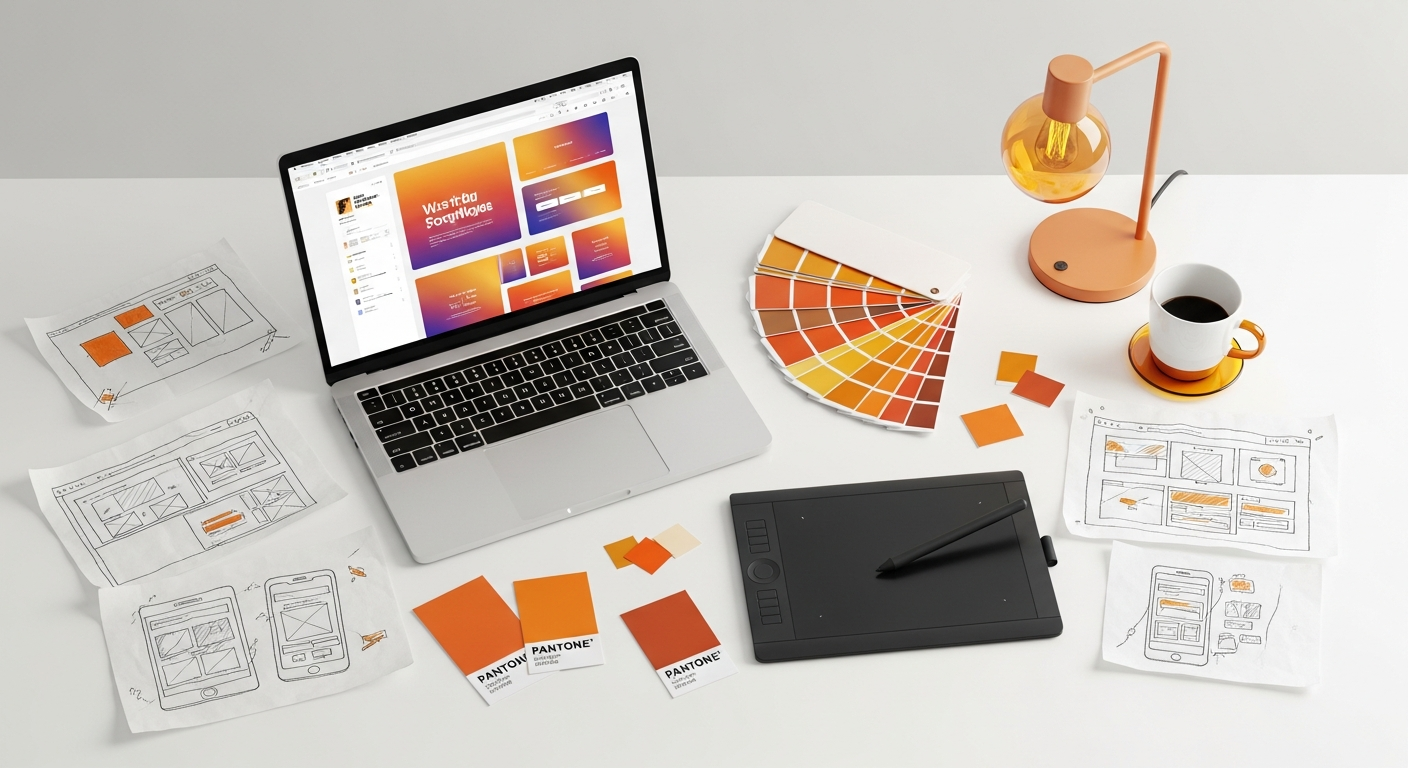
  • Sketch and Wireframe First: Start with low-fidelity sketches or wireframes. This allows you to focus purely on content arrangement and element sizing without getting bogged down by colors or detailed imagery. Experiment with different layouts to see which guides the eye most effectively.
  • Embrace Scale Contrast: Don’t be shy about making significant differences in size between your most important and least important elements. A subtle change often isn’t enough to establish a clear hierarchy. Think bold and dramatic where necessary.
  • Strategic Use of Color & Tone: Reserve your most vibrant or contrasting colors for your primary calls-to-action or key navigational elements. Use a more subdued palette for supporting information. Consistency in color usage for similar types of content is also crucial.
  • Master Typographic Pairing: Combine fonts thoughtfully. Choose a strong, legible font for headlines and another highly readable font for body text. Use variations in weight (bold, light), size, and capitalization to create multiple levels of hierarchy within text blocks.
  • Leverage Grids and Layout Systems: Grids provide a structured framework that brings order and consistency to your designs. Aligning elements to a grid naturally creates visual relationships and helps manage proximity and whitespace effectively.
  • Test and Iterate: The best way to know if your hierarchy is working is to test it. Ask others to quickly identify the main message or perform a specific action. Observe where their eyes go. Be prepared to refine and iterate based on feedback.

Common Pitfalls to Avoid in Visual Hierarchy

Even seasoned designers can stumble if they’re not mindful. Avoiding these common mistakes will ensure your designs remain effective and intuitive:

  • Too Many Focal Points: When everything is important, nothing is. Resist the urge to make every element scream for attention. This creates visual noise and overwhelms the viewer, leading to cognitive overload and frustration.
  • Lack of Contrast: Insufficient contrast in size, color, or weight between elements makes it difficult for the eye to differentiate between them. If your headline blends too much with your sub-headline, or your call-to-action doesn’t pop, your hierarchy is weak.
  • Inconsistent Styling: Using different fonts, colors, or spacing for elements of the same importance creates confusion. Consistency reinforces hierarchy and helps users learn to navigate your design.
  • Ignoring Natural Eye-Flow: Forgetting how users naturally scan content (e.g., left-to-right, top-to-bottom, F-pattern on web pages) can lead to placing crucial information out of the natural viewing path.
  • Overuse of “Special Effects”: Excessive use of shadows, glows, animations, or complex textures on multiple elements can quickly undermine hierarchy by creating too many distractions rather than guiding focus.

Elevating Your Designs with Intentional Hierarchy

Ultimately, visual hierarchy is more than just a set of rules; it’s a way of thinking about how people consume information and experience your design. It’s about storytelling with intention. When you master visual hierarchy, you’re not just arranging pixels; you’re crafting an experience, guiding emotions, directing attention, and building trust. You’re creating clarity out of complexity, making your designs not only aesthetically pleasing but also profoundly effective and user-friendly.

By consciously applying the principles of size, color, placement, and typography, and by consistently prioritizing your content, you empower your designs to communicate with unprecedented clarity and impact. Embrace visual hierarchy as your design compass, and watch your creations truly resonate with your audience.

Summary: Visual hierarchy is the fundamental design principle that strategically arranges elements to signify importance, guiding the user’s eye and enhancing communication. By skillfully manipulating elements like size, color, placement, and typography, designers can create intuitive, clear, and impactful layouts that prevent overwhelm and direct focus effectively. Mastering these techniques is essential for crafting user-friendly experiences and elevating design from merely decorative to truly powerful and purposeful.