Mastering the Future: A Senior Designer’s Guide to AI Tools for UI/UX & Web in 2026
The AI Revolution in Design: Beyond Automation
For years, designers have embraced automation to handle repetitive tasks, from batch resizing images to generating boilerplate CSS. But the current generation of AI design tools, particularly those leveraging machine learning and generative capabilities, goes far beyond simple automation. We’re talking about intelligent assistance that can understand context, learn from vast datasets, and even generate novel design solutions. This isn’t about AI replacing the human designer; it’s about augmentation. AI acts as a sophisticated co-pilot, handling the heavy lifting of data analysis, pattern recognition, and initial concept generation, freeing up our cognitive load for the truly human aspects of design: empathy, strategic thinking, nuanced problem-solving, and creative direction.
Think of it this way: instead of spending hours sifting through user research data, an AI can highlight key pain points and emerging trends in minutes. Instead of meticulously crafting every single layout variation, AI can propose dozens based on your design system and content, allowing you to focus on selecting and refining the most impactful options. This shift means designers are moving from being pixel-pushers to becoming curators, strategists, and prompt engineers – roles that demand a deeper understanding of design principles and a sharper critical eye than ever before. Embracing this shift is crucial; those who learn to harness AI’s power will be the ones defining the visual and interactive landscapes of 2026 and beyond.
Supercharging Your Workflow: AI for Ideation & Research
The initial phases of any design project—ideation and research—are often the most time-consuming and labor-intensive. This is precisely where AI design tools offer transformative benefits, allowing designers to accelerate discovery and generate richer insights.
User Research & Persona Generation
Imagine having an assistant that can synthesize qualitative and quantitative data at lightning speed, identifying patterns and insights that might take a human team days or weeks to uncover. AI is making this a reality.
* Data Synthesis and Pattern Recognition: Tools integrated with AI can analyze volumes of user interviews, survey responses, and analytics data. Platforms like UserTesting are incorporating AI to auto-tag insights, summarize findings, and even identify emotional sentiment in video recordings. This enables designers to quickly grasp user needs, pain points, and motivations.
* Synthetic Persona Generation: While human-crafted personas are invaluable, AI can augment this process. By feeding AI models (like advanced versions of ChatGPT or Bard) with real user data or even broad demographic information, you can generate detailed, data-backed synthetic personas in minutes. These serve as excellent starting points, offering a diverse range of user types and scenarios to consider, which you can then refine with your team’s qualitative insights.
* Journey Mapping Acceleration: AI can help map out potential user journeys by predicting common paths and friction points based on existing data. This helps you visualize user flows more efficiently, highlighting areas for improvement even before prototyping begins.
Practical Application: Start by feeding your collected survey data, interview transcripts, and analytics reports into an AI-powered analysis tool. Ask it to identify the top three pain points users face, categorize common feature requests, and even suggest unmet needs. Use the generated personas as a prompt for your team’s brainstorming sessions, challenging assumptions and ensuring a broader perspective on your target audience.
Concept Generation & Mood Boards
Staring at a blank canvas is a designer’s perennial challenge. AI can shatter creative blocks by rapidly generating visual concepts and mood board elements.
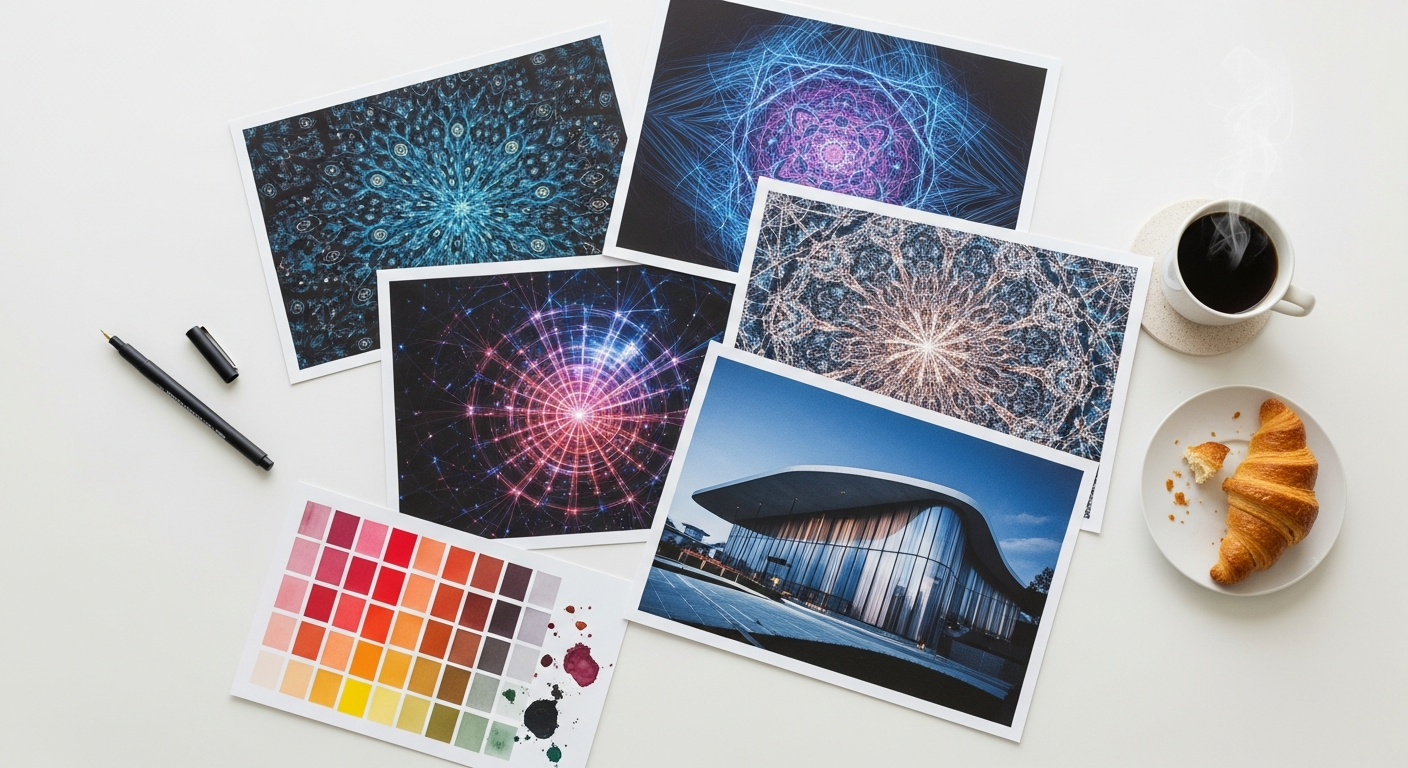
* Generative Image AI for Visual Inspiration: Tools like Midjourney, DALL-E 3, and Stable Diffusion have become indispensable for generating initial visual concepts, exploring different aesthetics, and building mood boards.
* Process: Instead of searching stock photo sites for hours, you can use prompt engineering to describe the mood, style, color palette, and even specific elements you envision. For example, “minimalist UI, dark mode, futuristic, clean lines, subtle gradients, abstract background” can yield dozens of unique visual directions in minutes.
* Iteration and Refinement: These tools allow for iterative prompting, enabling you to refine outputs by adding or removing keywords, adjusting parameters, and exploring variations until you hit upon a compelling visual direction.
* Brand Identity Exploration: For branding projects, tools like Looka leverage AI to generate logo concepts, brand kits, and color palettes based on your industry and preferences. While often requiring human refinement, they provide a strong foundation for visual identity exploration.
* Style Guide Scaffolding: AI can analyze existing designs or brand guidelines to suggest consistent typography pairings, color schemes, and icon styles, helping to lay the groundwork for a robust design system.
Practical Application: When starting a new project, dedicate 30 minutes to prompt engineering with a generative AI tool. Explore different visual metaphors, color combinations, and stylistic approaches. Curate the most promising results into a digital mood board, using them as conversation starters with clients or team members. This dramatically shortens the initial ideation phase, allowing you to move to higher-fidelity design faster.
Design Execution & Prototyping: AI as Your Co-Pilot
Once you’ve nailed down your concepts, AI continues to be an invaluable co-pilot during the design execution and prototyping phases. It helps you translate ideas into tangible interfaces with unprecedented speed and consistency.
Layout & UI Generation
The days of manually dragging and dropping every single element might soon be a distant memory. AI-powered tools are now capable of generating entire UI layouts and components.
* Smart Layout Suggestions: Platforms like Figma are integrating advanced plugins (e.g., Anima, Relume AI) that can take your content or basic wireframes and suggest fully designed layouts adhering to common UI patterns and best practices. Similarly, Uizard allows you to convert sketches or screenshots directly into editable UI designs using AI.
* Content-Aware Design: Tools like Adobe XD’s Content-Aware Layout and Sketch’s Smart Layout have offered glimpses of this for a while, intelligently resizing and repositioning elements. Modern AI takes this further, understanding the semantic meaning of your content to propose optimal arrangements.
* Design System Adherence: AI can scan your work and ensure it complies with your established design system, flagging inconsistencies in spacing, typography, or component usage. This is particularly powerful for large teams working on complex products.
Practical Application: Start with a basic wireframe or even just a set of content blocks. Use an AI-powered plugin in Figma or a dedicated tool like Uizard to generate several layout variations. Review these suggestions, select the most promising, and then refine them manually. This dramatically reduces the initial setup time, allowing you to focus on the intricate details and user flow. For existing projects, run an AI audit to identify any design system deviations, ensuring consistency across your product.
Content Generation & Placeholder Data
Waiting for final copy or realistic images can often bottleneck the design process. AI provides excellent solutions for generating placeholder content.
* Intelligent Placeholder Text: Beyond “Lorem Ipsum,” AI models like ChatGPT or specialized plugins can generate contextually relevant placeholder text. Provide a brief description of the section (e.g., “a hero section for a SaaS product selling project management software”) and receive realistic headlines, body copy, and calls to action that make your mockups feel more authentic.
* Dynamic Image Generation: Integrating with generative AI tools or AI-enhanced stock photo platforms, you can quickly populate your designs with relevant imagery. Instead of searching for the perfect image, you can generate it based on your prompt, ensuring it fits the visual style and context of your design. Many plugins now allow you to directly generate images within your design environment.
* Realistic Data Population: For data-heavy interfaces, AI can generate realistic dummy data – names, dates, figures, and descriptions – that accurately reflect the type of information your users will encounter. This makes prototypes far more convincing and testable.
Practical Application: When building a new page or component, use an AI text generator to populate fields with meaningful placeholder content. For visual elements, use a generative AI tool to create unique background images or illustrative icons that match your design’s tone. This allows stakeholders to better visualize the final product and provides a more accurate representation for user testing.
Prototyping & Interaction Design
Bringing static designs to life through prototypes is essential for testing usability. AI is enhancing this process by suggesting interactions and streamlining animation.
* Smart Animation Suggestions: Tools like Figma’s Smart Animate and Adobe XD’s Auto-Animate are becoming smarter, leveraging AI to predict logical transitions and micro-interactions based on common UI patterns. They can suggest easing curves, durations, and even entire animation sequences to make your prototypes feel more fluid and natural.
* User Flow Optimization: By analyzing common user paths and interaction patterns, AI can suggest optimal navigation structures and interaction sequences, helping to reduce friction in your prototypes.
* Automated Accessibility Checks for Interactions: As you build prototypes, AI can flag potential accessibility issues related to interaction design, such as insufficient tap targets or ambiguous hover states, ensuring your designs are inclusive from the outset.
Practical Application: After designing a series of screens, use your design tool’s AI-enhanced animation features. Instead of manually setting every parameter, let the AI suggest initial transitions. Review and fine-tune these suggestions to create a compelling and smooth user experience in your prototype. This allows for faster iteration and more realistic user testing.
Optimization & Personalization: AI for User Experience Excellence
The design journey doesn’t end at launch; it’s an ongoing process of refinement and optimization. AI design tools are proving indispensable in understanding user behavior, personalizing experiences, and maintaining design consistency at scale.
A/B Testing & Personalization
Gone are the days of purely manual A/B testing. AI is revolutionizing how we test, analyze, and personalize user experiences.
* Intelligent Variation Generation: AI can suggest optimal variations for A/B tests based on historical data, user segments, and design principles. Instead of guessing which button color or headline works best, AI can propose the most likely candidates for success.
* Predictive Analytics for Personalization: Platforms like Optimizely and VWO are integrating AI to not only run A/B tests but also to analyze user behavior in real-time. This allows them to predict user preferences and dynamically serve personalized content, layouts, or calls to action to different user segments. Imagine a website that automatically adjusts its hero section based on a user’s previous browsing history or demographic profile.
Automated Insight Generation: AI can sift through vast amounts of A/B test data, identify statistically significant findings, and explain why* certain variations performed better, providing actionable insights for designers.
Practical Application: When designing a new landing page or feature, use an AI-powered A/B testing tool to generate variations for key elements (e.g., hero image, CTA button, headline). Let the AI predict which variations are most likely to convert, then run your tests. After the test, leverage the AI’s analytical capabilities to understand the ‘why’ behind the results, informing your next design iteration.
Accessibility & Inclusivity Checks
Ensuring your designs are accessible to everyone is not just good practice; it’s a fundamental ethical and legal requirement. AI significantly streamlines this critical process.
* Automated WCAG Compliance Audits: Tools like Stark (a popular plugin for Figma, Sketch, and Adobe XD) and axe DevTools leverage AI to scan your designs for common accessibility issues, such as insufficient color contrast, missing alt text, or improper heading structure, aligning with WCAG guidelines.
* Color Blindness Simulation & Correction: AI can simulate how your designs appear to users with various forms of color blindness, helping you identify and correct problematic color choices before development. Some tools even suggest alternative color palettes that maintain visual integrity for all users.
* Cognitive Load Analysis: Emerging AI applications are starting to analyze UI complexity and suggest ways to reduce cognitive load, making interfaces easier to understand and use for individuals with cognitive disabilities.
Practical Application: Integrate accessibility checks as a routine step in your design review process. Before handing off designs, run an AI-powered accessibility audit. Address any flagged issues, particularly color contrast and text readability, to ensure your product is usable by the widest possible audience.
Design System Maintenance
Maintaining a consistent and up-to-date design system is a continuous challenge for growing teams. AI can act as a vigilant guardian of your design system’s integrity.
* Automated Component Auditing: AI can scan your design files and identify instances where components are used inconsistently or where designers have “detached” from the main component library. It can flag outdated components or suggest updates based on the latest design system version.
* Documentation Generation & Updates: AI can assist in generating and updating design system documentation by analyzing your components and suggesting descriptions, usage guidelines, and code snippets.
* Cross-Platform Consistency Checks: For products available on multiple platforms (web, iOS, Android), AI can compare component usage and visual styles to ensure consistency across the ecosystem, highlighting discrepancies that might otherwise be missed.
Practical Application: Schedule regular AI-powered audits of your design files against your established design system. Use the generated reports to identify and rectify inconsistencies, ensuring your product’s UI remains cohesive and scalable. This proactive approach prevents design debt from accumulating and keeps your design system healthy.
The Future is Collaborative: AI and the Human Designer
By 2026, the discussion around AI in design will have firmly shifted from “will it replace us?” to “how can we best collaborate with it?”. The truth is, AI is a tool, an incredibly powerful one, but a tool nonetheless. It augments our capabilities, handles the computationally intensive tasks, and offers data-driven insights, but it cannot replicate the nuanced empathy, critical judgment, cultural understanding, or true creative spark that defines a human designer.
Our role is evolving. We are becoming:
* Prompt Engineers: Learning to articulate our creative intent to AI in precise, iterative prompts is a new, essential skill.
* Curators and Editors: AI generates options; we select, refine, and imbue them with human sensibility and strategic purpose.
* Strategists: With AI handling much of the tactical execution, designers can elevate their focus to higher-level strategic thinking, understanding business goals, and shaping the overall product vision.
* Ethical Stewards: We must critically evaluate AI’s outputs for bias, ensure data privacy, and champion responsible AI design principles to create inclusive and fair experiences.
* Problem Solvers with Enhanced Tools: Our core mission remains solving user problems, but now we have an immensely powerful assistant to help us do it faster and more effectively.
Upskilling for this AI-driven workflow involves experimenting with new tools, understanding the underlying principles of AI (without needing to be a data scientist), and fostering a mindset of continuous learning. Embrace the unknown, challenge your existing workflows, and view AI not as a competitor, but as a catalyst for a more innovative, efficient, and creatively fulfilling design future. The most successful designers in 2026 will be those who master the art of human-AI collaboration, leveraging technology to amplify their unique human strengths.