Beyond the Basics: Advanced UX Research Methods for Experienced Designers
Ethnographic Research and Contextual Inquiry: Unveiling Unspoken Needs
While interviews tell us what users say they do, ethnographic research and contextual inquiry reveal what users actually do, often uncovering profound insights that even users themselves aren’t consciously aware of. Originating from anthropology, ethnography in UX involves immersing oneself in a user’s natural environment to observe their behavior, interactions, and the context of their activities over an extended period. Contextual inquiry is a more focused, shorter-term variant, where a researcher observes and interviews users as they perform tasks in their real-world setting, encouraging them to “think aloud” and demonstrate their processes.
Why Ethnographic Research is Advanced:
These advanced UX research methods move beyond stated preferences to reveal the true lived experience, the unspoken pain points, workarounds, and implicit needs that shape user behavior. They are invaluable for designing for complex domains, understanding cultural nuances, or when developing truly novel products where users can’t articulate future needs because they haven’t experienced them yet. The depth of insight gained through direct observation in natural settings often forms the bedrock for groundbreaking product strategies.
Real-World Example of Ethnographic Research:
Consider a team designing software for nurses in a hospital. Traditional interviews might reveal frustrations with existing systems. However, through ethnographic research, observing nurses during their shifts – amidst emergencies, patient interactions, and equipment malfunctions – would reveal the true chaos, the split-second decisions, the lack of seamless handoffs, and the physical constraints of their environment. This could lead to insights far beyond a simple UI redesign, prompting solutions like mobile-first tools, voice commands for sterile environments, or integrated communication platforms.
Practical Steps and Actionable Tips for Ethnographic Research:
- Define Scope and Questions: Clearly identify the user group, context, and high-level questions you want to explore. Avoid overly specific hypotheses initially; focus on discovery.
- Prepare for Observation: Develop an observation protocol or checklist, but remain flexible. Consider what data to collect (notes, photos, video, audio recordings – with informed consent).
- Build Rapport Ethically: Spend time getting to know participants before observing. Be transparent about your purpose. Ensure strict adherence to privacy and data protection guidelines.
- Observe and Interview in Context: Watch users perform tasks, ask “why” questions to understand motivations, and inquire about workarounds. Encourage thinking aloud. Don’t interrupt flow excessively.
- Document Thoroughly: Record detailed field notes, capturing not just actions but also expressions, environmental factors, and incidental details. Use “thick description” to provide rich context.
- Triangulate Data: Combine observations with informal interviews and artifact analysis (e.g., users’ existing tools, documents) to cross-verify insights and build a holistic picture.
- Synthesize and Analyze: Look for patterns, recurring pain points, “A-ha!” moments, and unexpected behaviors. Affinity mapping and journey mapping are excellent tools for synthesis.
Longitudinal Studies and Diary Methods: Capturing Evolution and Habits
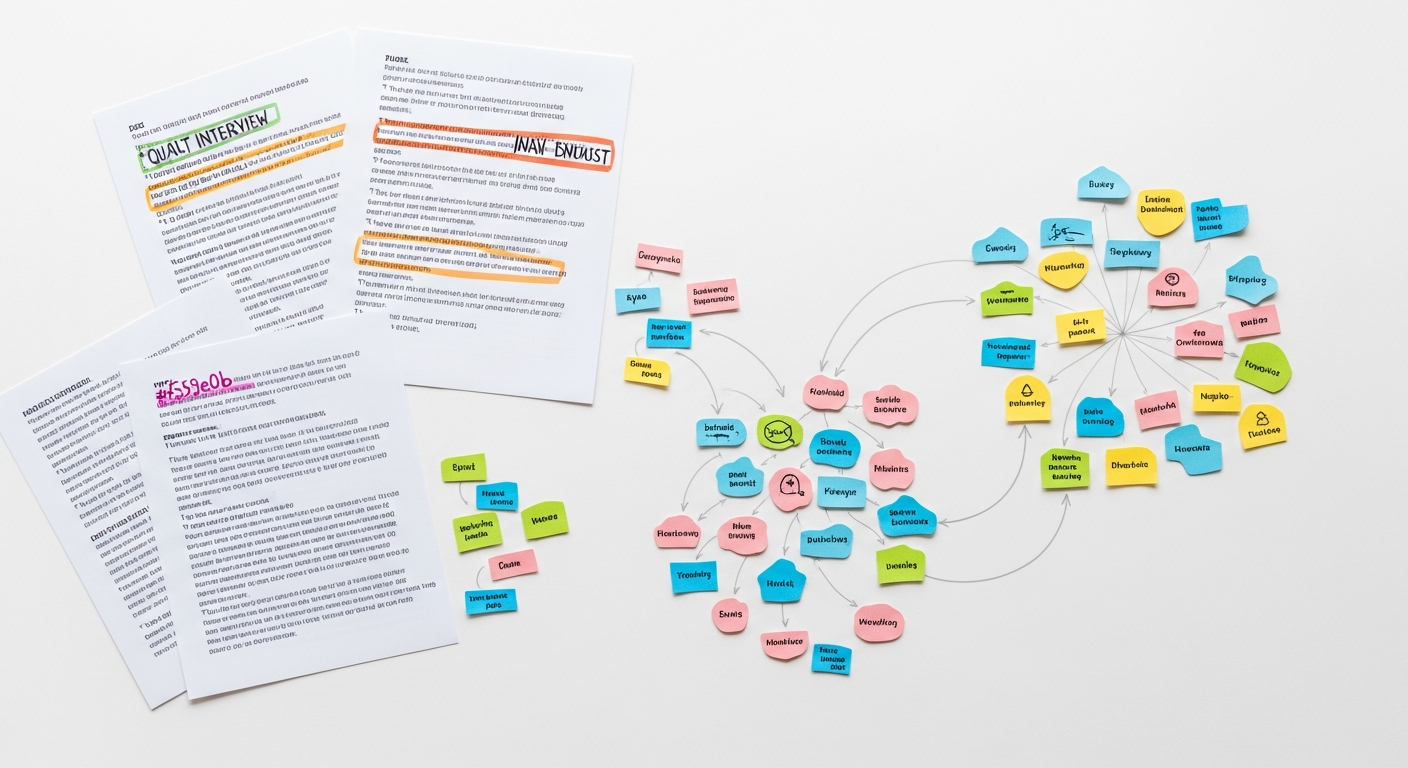
Many user experiences aren’t static; they evolve over time as users learn, habits form, and contexts change. Longitudinal studies and diary methods are advanced UX research methods specifically designed to capture this dynamic evolution. A longitudinal study involves tracking the same group of users over an extended period (weeks, months, even years), observing how their needs, behaviors, and perceptions change in response to a product or external factors. Diary studies, a common technique within longitudinal research, ask participants to record their experiences, thoughts, and actions at specific intervals or moments of interaction with a product or service, typically using a digital diary tool or app.
Why Longitudinal Studies are Advanced:
These methods provide insights into habit formation, long-term engagement, the impact of learning curves, and the true integration of a product into a user’s life. They are crucial for understanding user retention, identifying evolving pain points, and measuring the sustained value proposition of a design. Unlike single-point-in-time research, longitudinal approaches reveal causal relationships and the natural arc of user experience.
Real-World Example of Longitudinal Studies:
Imagine designing a fitness tracking app. A single usability test might show users can log workouts. A longitudinal diary study, however, could reveal critical insights: why users drop off after two weeks (e.g., motivation wanes, inputting food becomes tedious), what features become most valuable over time (e.g., progress visualization, social sharing), and how the app integrates into their daily routine (e.g., morning check-ins vs. end-of-day logging). This data can inform features for long-term engagement and user retention strategies.
Practical Steps and Actionable Tips for Longitudinal Studies:
- Define Study Duration and Frequency: Determine how long the study needs to run to capture meaningful change (e.g., 2 weeks for initial habit formation, 3 months for full integration). Define reporting frequency (e.g., daily entries, weekly summaries).
- Recruit Committed Participants: Longitudinal studies require significant participant commitment. Offer appropriate incentives and clearly communicate expectations. Look for users genuinely interested in the topic.
- Design Clear Diary Prompts: Create specific, actionable prompts that are easy for participants to answer quickly. Use a mix of open-ended questions and structured scales (e.g., “On a scale of 1-5, how frustrating was this task?”).
- Choose the Right Tools: Utilize digital diary tools (e.g., Ethnio, dscout, simple survey tools) that allow for easy submission of text, photos, and videos. Ensure mobile-friendliness.
- Maintain Engagement and Communication: Regularly check in with participants, provide reminders, and offer encouragement. Respond to questions promptly.
- Iterative Analysis: Don’t wait until the end to analyze data. Review entries periodically to identify emerging themes, adjust prompts if needed, or follow up with specific participants.
- Focus on Patterns Over Time: Look for trends, shifts in sentiment, and how behaviors change. Map these against product updates or external events.
Eye-Tracking and Biometric Data: Decoding Subconscious User Responses
Users often can’t articulate exactly what captures their attention, what causes them cognitive strain, or their precise emotional response to an interface. Eye-tracking and biometric data collection offer powerful, objective insights into these subconscious reactions. Eye-tracking technology records where users look on a screen, the sequence of their gaze, and the duration of their fixations, revealing their visual hierarchy and attention patterns. Biometric data, such as heart rate variability (HRV), galvanic skin response (GSR), and facial coding, measures physiological responses correlated with stress, excitement, confusion, or other emotional states.
Why Eye-Tracking and Biometric Data are Advanced:
These advanced UX research methods provide a layer of data that transcends self-reported feedback, which can be influenced by recall bias or a desire to please. By tapping into the subconscious, designers can gain a deeper understanding of genuine engagement, cognitive load, decision-making processes, and emotional resonance. This is particularly valuable for optimizing critical paths, identifying subtle usability issues, and designing emotionally compelling experiences.
Real-World Example of Eye-Tracking and Biometric Data:
A financial institution redesigning its online banking portal could use eye-tracking to understand where users first look on the dashboard, whether they easily find critical information like account balances or recent transactions, and if calls to action (e.g., “Transfer Funds”) are visually prominent. Biometric data, like GSR, could detect moments of stress or frustration when users encounter complex forms or security prompts, indicating areas for simplification or clearer guidance, even if they don’t explicitly state their frustration.
Practical Steps and Actionable Tips for Eye-Tracking and Biometric Data:
- Define Clear Objectives: What specific visual behaviors or emotional responses are you trying to understand? (e.g., “Is the primary CTA noticed within 3 seconds?”, “Does this interaction cause measurable stress?”).
- Choose the Right Tools: Invest in or rent appropriate hardware (eye-trackers, GSR sensors, facial coding software). Consider remote eye-tracking solutions for broader participant pools, though these often have lower fidelity.
- Control the Environment: For lab-based studies, minimize distractions. Ensure consistent lighting and screen calibration. Remote studies require clear instructions for participants.
- Develop Specific Tasks: Create tasks that will elicit the behaviors or emotional responses you want to measure. Keep tasks realistic and scenario-based.
- Calibrate and Baseline: Ensure eye-trackers are properly calibrated for each participant. Collect baseline biometric data (e.g., resting heart rate) before task initiation for comparison.
- Combine with Qualitative Data: Always pair eye-tracking and biometric data with post-task interviews or think-aloud protocols. The “what” (data) needs the “why” (user explanation).
- Analyze Data Carefully: Interpret heatmaps, gaze plots, and biometric fluctuations in context. Look for patterns, outliers, and correlations between physiological responses and specific UI elements or interaction points.
- Ethical Considerations: Be transparent with participants about the data being collected and how it will be used. Ensure data privacy and security.
Advanced A/B/n and Multivariate Testing: Beyond Simple Comparisons
While basic A/B testing compares two versions of a single element (e.g., button color), advanced A/B/n and multivariate testing (MVT) take experimentation to the next level. A/B/n testing allows for the comparison of three or more variations (A, B, C, etc.) of a single element. Multivariate testing, on the other hand, simultaneously tests multiple variations of multiple elements on a single page or flow to determine which combination of variables produces the optimal outcome. These are powerful advanced UX research methods for optimizing complex digital products and services at scale.
Why Advanced A/B/n and Multivariate Testing is Advanced:
MVT allows designers to understand the interaction effects between different design elements – how changing one component (e.g., headline) influences the effectiveness of another (e.g., image or call to action). This goes beyond simply identifying “better” individual elements to finding the best combination for overall performance. It requires robust statistical understanding, careful experimental design, and sufficient traffic to reach statistical significance, making it a sophisticated tool for experienced practitioners.
Real-World Example of Advanced A/B/n and Multivariate Testing:
Consider an e-commerce product page. A simple A/B test might compare two different product image sizes. An MVT, however, could simultaneously test variations of the product image (size A, B), the headline (text C, D), and the “Add to Cart” button (color E, F). The goal would be to identify which specific combination of image size + headline text + button color leads to the highest conversion rate, factoring in how these elements influence each other. This level of optimization can yield significant revenue improvements.
Practical Steps and Actionable Tips for Advanced A/B/n and Multivariate Testing:
- Formulate Clear Hypotheses: Before testing, clearly define what you expect to happen and why (e.g., “Changing the headline to X and the button color to Y will increase conversion by Z% because…”).
- Identify Key Variables: Choose elements with a high potential impact on your desired metric (e.g., conversion rate, click-through rate, time on page). Avoid testing too many variables at once without sufficient traffic.
- Design Your Experiment:
- Factorial Design: For MVT, this involves testing every possible combination of variations. For example, 2 headlines * 2 images * 2 CTAs = 8 variations.
- Fractional Factorial Design: If you have many variables, this tests a subset of combinations to identify main effects more efficiently, though it might miss some interaction effects.
- Calculate Sample Size: Use a power analysis calculator to determine the required sample size and testing duration to achieve statistical significance for your desired effect size and confidence level. Under-powered tests lead to inconclusive results.
- Use Robust Testing Tools: Leverage platforms like Optimizely, VWO, Google Optimize, or Split.io, which offer sophisticated MVT capabilities and statistical analysis.
- Ensure Clean Data & Tracking: Verify that analytics tracking is correctly implemented for all variations and that data integrity is maintained throughout the experiment.
- Analyze Results with Statistical Rigor: Look beyond simple averages. Understand confidence intervals, statistical significance (p-values), and potential confounding variables. Identify not just which combination “won” but why.
- Iterate and Learn: MVT is not a one-time event. Use the insights gained to inform subsequent tests and ongoing optimization efforts.
Service Design Blueprinting and Systems Thinking: Mapping the Holistic Experience
In today’s interconnected world, user experiences rarely exist in isolation. They are part of larger service ecosystems involving multiple touchpoints, channels, and internal processes. Service design blueprinting, informed by systems thinking, is an advanced UX research method that maps the entire journey of a user (customer) through a service, comprehensively illustrating not just the user-facing “frontstage” interactions but also the “backstage” processes, systems, and people that enable those interactions. It connects user needs directly to organizational capabilities and dependencies.
Why Service Design Blueprinting is Advanced:
This method forces designers to adopt a holistic, end-to-end perspective, moving beyond individual product features to understand the complete service delivery system. It’s advanced because it requires cross-functional collaboration, a deep understanding of organizational structures, and the ability to visualize complex dependencies. It uncovers systemic pain points, identifies opportunities for innovation across touchpoints, and helps align disparate teams toward a shared vision of the customer experience.
Real-World Example of Service Design Blueprinting:
Consider the experience of applying for a mortgage. A user journey map might detail the applicant’s steps, emotions, and pain points as they gather documents, fill out forms, and communicate with bank representatives. A service blueprint, however, would extend this by mapping the bank’s internal processes: the roles of loan officers, underwriters, legal teams; the IT systems used for document processing and communication; the physical office environment; and how these backstage elements directly impact the applicant’s frontstage experience. It might reveal that slow backend approval processes are the root cause of applicant frustration, leading to systemic rather than cosmetic solutions.
Practical Steps and Actionable Tips for Service Design Blueprinting:
- Define the Scope of the Service: Clearly delineate the beginning and end of the service journey you are blueprinting.
- Identify Key User Actions/Stages: Start with a user journey map to define the major stages and touchpoints from the user’s perspective.
- Map Frontstage Interactions: For each user action, identify what the user sees, hears, or interacts with directly (e.g., website, customer service agent, mobile app).
- Uncover Backstage Actions: For each frontstage interaction, identify the internal actions, processes, and people that enable it (e.g., database queries, call center scripts, approval workflows). This often requires interviewing internal stakeholders.
- Identify Support Processes and Systems: Map the underlying technologies, policies, and resources (e.g., CRM systems, training manuals, legal frameworks) that support both frontstage and backstage actions.
- Add Evidence of Service: Include tangible elements that users experience or perceive as part of the service (e.g., emails, physical documents, notifications).
- Highlight Pain Points and Opportunities: Actively mark areas of friction, inefficiencies, or moments of delight for both users and internal teams.
- Facilitate Cross-Functional Workshops: Bring together stakeholders from different departments (marketing, sales, IT, operations, customer service) to collaboratively build the blueprint. This fosters shared understanding and breaks down silos.
- Visualize and Communicate: Create a clear, easily understandable visual blueprint. Use swimlanes, timelines, and clear iconography. This artifact becomes a powerful communication tool for strategic discussions and identifying intervention points.
Predictive Analytics and Machine Learning in UX Research: Anticipating Future Needs
The rise of big data and artificial intelligence has ushered in a new frontier for advanced UX research methods: predictive analytics and machine learning (ML). Instead of merely understanding past and present user behavior, these techniques allow designers to forecast future actions, personalize experiences at scale, and proactively identify opportunities or risks. By applying statistical models and ML algorithms to vast datasets of user interactions, demographics, and behavioral patterns, designers can anticipate what users will do next, what content they’ll prefer, or when they might churn.
Why Predictive Analytics and Machine Learning is Advanced:
This approach requires a strong foundation in data science, an understanding of statistical modeling, and access to significant amounts of high-quality data. It moves beyond descriptive and diagnostic analytics (what happened, why it happened) to predictive and prescriptive analytics (what will happen, what should we do). It transforms UX from being purely reactive to actively shaping future outcomes based on data-driven foresight, leading to highly personalized and optimized experiences.
Real-World Example of Predictive Analytics and Machine Learning:
A streaming service uses predictive analytics to suggest movies or shows a user might like based on their viewing history, ratings, and even the viewing patterns of similar users. In UX, this extends to predicting which users are at risk of unsubscribing (churn prediction) based on declining engagement metrics, which features a user is most likely to adopt, or even forecasting the optimal time to send a personalized notification to maximize engagement. This allows designers to intervene proactively with targeted content or UI adjustments.
Practical Steps and Actionable Tips for Predictive Analytics and Machine Learning:
- Collaborate with Data Scientists: This is a team sport. Partner closely with data scientists who can build and validate the models. Your role is to provide UX context, define relevant user behaviors, and interpret findings for design implications.
- Identify Key Data Sources: Determine what user data is available (e.g., interaction logs, purchase history, demographics, survey responses, search queries) and ensure its quality and cleanliness.
- Define Clear Prediction Goals: What specific user behavior or outcome do you want to predict? (e.g., user churn, feature adoption, content engagement, conversion probability).
- Feature Engineering: Work with data scientists to identify and create relevant “features” (variables) from your raw data that can inform the predictive model. For example, “time since last login” or “number of unique features used per session.”
- Model Selection and Training: Understand the basics of common ML models (e.g., regression, classification, clustering). The data science team will select and train appropriate models. Your role is to provide the “ground truth” of user behavior against which the model is validated.
- Interpret and Validate Predictions: Don’t blindly trust model outputs. Understand the model’s accuracy, precision, and recall. Question false positives/negatives. Corroborate predictions with qualitative UX research when possible.
- Translate Insights into Design Actions: The most crucial step for UX. How do the predictions inform your design decisions? If a model predicts churn, what design interventions can you implement to mitigate it? (e.g., targeted onboarding improvements, proactive support, personalized content recommendations).
- Ethical Considerations: Be acutely aware of biases in data and algorithms. Ensure predictions are used to enhance user experience ethically and not to manipulate or discriminate. Transparency with users about data usage is paramount.
Conclusion: Elevate Your Impact with Advanced UX Research Methods
The journey from competent UX designer to strategic innovator is often paved with deeper insights derived from more sophisticated research. By embracing these advanced UX research methods—from the immersive depths of ethnography and the long-term perspective of longitudinal studies, to the subconscious revelations of biometrics, the precision of advanced A/B/n testing, the systemic understanding of service blueprinting, and the foresight of predictive analytics—you empower yourself to uncover truths that remain hidden to less seasoned practitioners. These techniques move you beyond iterative improvements to genuinely transformative design, enabling you to anticipate needs, resolve complex systemic issues, and craft experiences that resonate profoundly with users.
The next step is to choose one method that aligns with your current design challenge and commit to exploring it. Invest in learning, collaborate with specialists, and don’t be afraid to experiment. Your advanced research capabilities will not only elevate your design outcomes but also solidify your role as an indispensable strategic partner in any organization. Begin expanding your research horizons today, and watch your impact multiply.
Frequently Asked Questions About Advanced UX Research Methods
Further Reading & Resources