Understanding the Core: What is Brand Identity and Why It’s Crucial
Before diving into the mechanics of creation, it’s vital to grasp the fundamental concept of brand identity and its profound importance. Many people conflate brand identity with branding, but they are distinct. Branding is the active process of shaping your brand; brand identity is the tangible and intangible output of that process. It encompasses the visual, verbal, and experiential elements that communicate your brand’s unique personality and promise to the world. Think of it as your brand’s personality, its distinctive voice, and its unique visual signature.
Beyond the Logo: The Multifaceted Nature of Brand Identity
- Visual Identity: This is what most people first think of, and it includes your logo, color palette, typography, imagery style (photography, illustrations), iconography, and overall graphic design elements. These components work in harmony to create a consistent and recognizable aesthetic.
- Verbal Identity: This refers to your brand’s voice, tone, messaging, slogans, taglines, and even specific language choices. It dictates how you communicate with your audience across all platforms, from website copy to social media posts.
- Experiential Identity: This encompasses the overall feeling and experience customers have when interacting with your brand. It includes customer service, user experience (UX) on digital platforms, in-store ambiance, product packaging, and post-purchase support.
- Brand Values and Personality: These are the underlying principles and characteristics that define your brand. Are you innovative, traditional, playful, serious, luxurious, accessible? These traits inform every aspect of your identity.
The Irrefutable Importance of a Strong Brand Identity
A well-crafted brand identity is not a mere aesthetic choice; it’s a strategic imperative that underpins every facet of your business operations. Its impact is far-reaching, influencing everything from market positioning to customer loyalty.
- Differentiation in a Crowded Market: In a world brimming with similar products and services, your brand identity is what makes you stand out. It gives consumers a reason to choose you over competitors, offering a unique value proposition that resonates with their specific needs and aspirations. For a creative professional, this means showcasing your distinctive style and vision.
- Building Recognition and Recall: A consistent visual and verbal identity makes your brand instantly recognizable. When people see your logo, colors, or hear your brand’s voice, they immediately associate it with your products or services. This familiarity builds trust and makes it easier for customers to find and remember you.
- Fostering Trust and Credibility: A professional and cohesive brand identity signals reliability and expertise. It assures customers that you are a legitimate, well-organized, and trustworthy entity, instilling confidence in their decision to engage with your offerings.
- Enhancing Customer Loyalty: Brands with strong identities often forge emotional connections with their audience. When customers feel a bond with your brand’s values and personality, they are more likely to become repeat buyers and advocates, even becoming brand evangelists who spread positive word-of-mouth.
- Driving Business Value and Growth: A powerful brand identity can command higher prices, attract top talent, and open doors to new opportunities. It’s an invaluable asset that contributes significantly to your company’s overall equity and long-term success. It simplifies marketing efforts, making campaigns more effective and memorable.
- Guiding Internal Culture: A clear brand identity isn’t just for external audiences; it also serves as a guiding light for your internal team. It helps employees understand the company’s mission, values, and how they should represent the brand in their daily interactions.
Understanding these foundational aspects sets the stage for the rigorous, yet rewarding, process of creating your brand identity from scratch.
Phase 1: Discovery & Research – Unearthing Your Brand’s Core
The journey to building a compelling brand identity begins not with design software, but with deep introspection and thorough research. This discovery phase is about understanding the fundamental essence of your brand – its purpose, values, target audience, and competitive landscape. Skipping this critical step is akin to building a house without a blueprint; the results will likely be unstable and lack direction.
Defining Your Brand’s Purpose and Values
Every successful brand has a clear reason for being, a mission that extends beyond merely making a profit. This is your brand’s purpose, and it should be authentic and inspiring.
- What is Your “Why”? Articulate the core problem you solve, the need you fulfill, or the unique benefit you bring to the world. For an interior design blog like Layout Scene, perhaps the purpose is to empower readers to create inspiring spaces, demystify design principles, or connect a community of design enthusiasts.
- Identify Core Values: What principles guide your brand’s actions and decisions? Are they innovation, sustainability, luxury, accessibility, craftsmanship, community, or something else? These values should be genuine and reflected in everything you do, from product development to customer service. List 3-5 core values that truly resonate.
- Craft a Mission Statement: A concise statement that articulates your brand’s purpose and how it plans to achieve it. It should be aspirational yet realistic, guiding your strategy and inspiring your team.
- Develop a Vision Statement: Envision your brand’s long-term aspirations. What does success look like in 5, 10, or 20 years? This statement provides direction and motivation.
Understanding Your Target Audience
You cannot effectively communicate if you don’t know who you’re talking to. Detailed audience research is non-negotiable for creating a brand identity that truly resonates.
- Demographics: Go beyond age, gender, and location. Consider income levels, education, occupation, and family status.
- Psychographics: Delve into their interests, hobbies, lifestyle, attitudes, beliefs, values, and personality traits. What motivates them? What are their aspirations and frustrations?
- Needs and Pain Points: What challenges do your potential customers face that your brand can address? How does your offering solve their problems or fulfill their desires?
- Behavioral Patterns: How do they typically interact with brands like yours? What platforms do they use? What influences their purchasing decisions?
- Create Buyer Personas: Develop detailed profiles of your ideal customers. Give them names, backstories, and specific characteristics. This makes your audience feel real and helps you tailor your brand identity to their preferences. For example, if Layout Scene targets aspiring DIY decorators and professional designers, their needs and communication styles will differ.
Analyzing the Competitive Landscape
Knowing your competitors isn’t about imitation; it’s about understanding the market, identifying gaps, and finding ways to differentiate yourself.
- Direct Competitors: Who offers similar products or services? Analyze their brand identities – their logos, messaging, target audience, and overall brand experience. What do they do well? Where are their weaknesses?
- Indirect Competitors: Who offers alternative solutions to your target audience’s needs, even if their offering isn’t identical?
- Identify Market Gaps: Are there underserved segments of the market? Can you offer a unique perspective, a better experience, or a different value proposition that sets you apart?
- Benchmark Best Practices: Look at successful brands, both within and outside your industry, that you admire. What can you learn from their branding strategies? How do they build strong connections with their audience?
This phase is foundational. The insights gathered here will inform every subsequent decision in your brand identity creation process, ensuring that your brand is not just beautiful, but also strategic and effective. It’s the bedrock upon which a truly impactful brand identity is built, setting the stage for everything that follows.
Phase 2: Strategy & Positioning – Defining Your Brand’s Narrative
Crafting Your Brand Story and Narrative
Humans are wired for stories. A compelling brand story creates an emotional connection, making your brand memorable and relatable.
- The Origin Story: How did your brand come to be? What inspired its creation? Share the passion, the struggle, and the vision behind it.
- The Brand’s Hero: Is it the founder, the customer, or the brand itself? Position your brand within a narrative where it plays a meaningful role in the customer’s journey.
- Key Message and Themes: What overarching message do you want to convey? What recurring themes will your brand embody? For Layout Scene, it might be empowerment through design, the beauty of functional spaces, or the joy of creative expression.
- Authenticity and Relatability: Your story should be genuine and resonate with your target audience’s values and aspirations. Avoid jargon and speak from the heart.
Developing Your Unique Selling Proposition (USP)
Your USP is what makes your brand distinct from competitors. It’s the one thing you do better or differently, the core benefit that only you provide.
- Identify Your Differentiators: Based on your competitive analysis, what makes your brand truly unique? Is it a specific product feature, exceptional customer service, a novel approach, a particular aesthetic, or a strong ethical stance?
- Focus on Benefits, Not Just Features: While features describe what your product or service is, benefits explain what it does for the customer. For instance, a feature might be “sustainable materials,” but the benefit is “a beautiful home that aligns with your eco-conscious values.”
- Clarity and Conciseness: Your USP should be easy to understand and memorable. It should clearly communicate the value you offer.
Defining Your Brand Archetype and Personality
Brand archetypes (e.g., The Innocent, The Sage, The Explorer, The Lover, The Creator) provide a framework for understanding and developing your brand’s personality. They help you define how your brand thinks, feels, and behaves.
- Choose an Archetype: Select an archetype (or a blend of two) that best reflects your brand’s core values and resonates with your target audience. This choice will influence your brand’s tone of voice, visual style, and overall messaging. For Layout Scene, perhaps ‘The Creator’ or ‘The Sage’ would be fitting, emphasizing inspiration, knowledge, and skill development.
- Develop Personality Traits: Based on your archetype, list specific adjectives that describe your brand’s personality (e.g., sophisticated, playful, authoritative, rebellious, nurturing, adventurous). These traits will guide all your communication and design choices.
Positioning Statement
A positioning statement is an internal declaration that clearly articulates your brand’s unique value to your target market, especially in comparison to competitors. It serves as a compass for all strategic decisions.
- Template: “For [target audience], [brand name] is the [category] that [unique benefit/differentiator] because [reason to believe].”
- Example (for a hypothetical interior design software): “For aspiring interior designers and avid DIY decorators, Layout Scene Pro is the intuitive design software that empowers users to visualize and create stunning spaces with unparalleled ease and precision, because it combines professional-grade tools with a user-friendly interface and extensive material library.”
This strategic phase ensures that your brand identity is not just aesthetically pleasing but also purposeful, differentiated, and poised to connect deeply with your desired audience. It provides the essential blueprint for the creative execution that follows, ensuring that every design choice and every word spoken reinforces a clear, consistent, and compelling brand message.
Phase 3: Visual Identity Development – Bringing Your Brand to Life
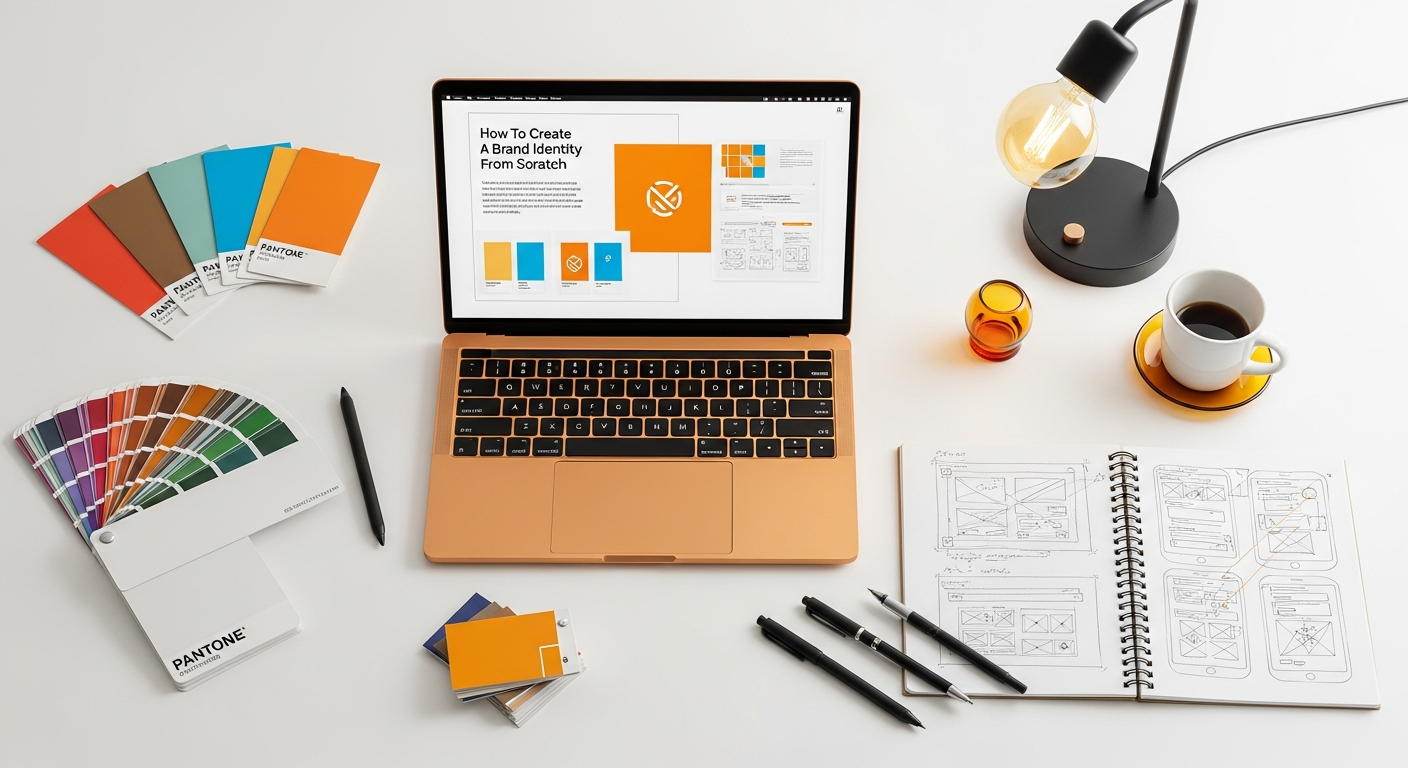
With your brand’s core strategy firmly established, it’s time to translate those insights into a tangible visual identity. This is often the most exciting part of the process, as your brand begins to take on a concrete form. However, remember that every visual element must be strategically chosen to reflect your brand’s purpose, values, personality, and target audience.
Logo Design: The Cornerstone of Your Visual Brand
Your logo is often the first point of contact between your brand and your audience. It should be memorable, versatile, and instantly recognizable.
- Simplicity and Memorability: A good logo is simple enough to be easily recalled and understood, even at a glance. Avoid overly complex designs.
- Versatility: Your logo needs to work across various platforms and sizes – from a tiny favicon to a large billboard, in both color and black & white.
- Timelessness: Aim for a design that will endure. While trends can be inspiring, a timeless logo avoids constant redesigns.
- Relevance: It should resonate with your industry and target audience, subtly hinting at what your brand does or represents.
- Uniqueness: Ensure your logo stands out from competitors and is distinct.
- Types of Logos: Consider wordmarks (text-based), lettermarks (initials), brandmarks (icon-based), combination marks (icon + text), or emblems (text within a symbol).
Color Palette: Evoking Emotion and Recognition
Colors have psychological associations and play a significant role in how your brand is perceived. Choose colors that align with your brand’s personality and the emotions you want to evoke.
- Primary Colors: 1-3 dominant colors that define your brand’s core look.
- Secondary Colors: A set of complementary colors that add depth and variety without overwhelming the primary palette.
- Accent Colors: Used sparingly for highlights, calls to action, or emphasis.
- Color Psychology: Research the emotional impact of different colors (e.g., blue for trust, green for nature/growth, red for passion/energy, yellow for optimism).
- Accessibility: Ensure sufficient contrast for readability, especially for digital applications, adhering to accessibility guidelines.
Typography: Setting the Tone Through Typefaces
The fonts you choose convey personality and readability. They contribute significantly to the overall aesthetic and professionalism of your brand.
- Primary Typeface: Used for headlines and prominent text. It should capture your brand’s personality.
- Secondary Typeface: Used for body copy, ensuring readability and complementing the primary font.
- Font Pairing: Aim for harmony and contrast. Often, pairing a serif with a sans-serif, or a bold display font with a clean body font, works well.
- Licensing: Always check the licensing agreements for any fonts you use, especially for commercial purposes.
- Legibility: Ensure your chosen fonts are easy to read across all platforms and sizes.
Imagery and Visual Style: Telling Your Story Visually
This includes the style of photography, illustrations, icons, and other graphic elements that consistently appear across your brand’s touchpoints.
- Photography Style: Will your images be bright and airy, moody and dramatic, candid, or stylized? What kind of subjects will be featured? For an interior design blog, this might mean high-quality, aspirational room shots or step-by-step DIY visuals.
- Illustration Style: If you use illustrations, will they be minimalist, whimsical, technical, or hand-drawn?
- Iconography: Consistent icons enhance user experience and reinforce your brand’s visual language.
- Visual Metaphors: What recurring visual themes or motifs can reinforce your brand’s message?
Creating Brand Guidelines
Once all visual elements are defined, compile them into a comprehensive brand style guide. This document is crucial for maintaining consistency across all future applications.
- Logo Usage: Clear rules on minimum size, clear space, allowed variations, and incorrect usage.
- Color Codes: Hex, RGB, CMYK, and Pantone values for all colors.
- Typography Hierarchy: Specifications for headings, body text, and other textual elements.
- Imagery Guidelines: Examples of approved photography, illustration styles, and usage rules.
- Brand Voice & Tone: (Though primarily verbal, it’s often included here for a holistic view).
- Applications: Examples of how the brand identity should be applied to various materials (e.g., website, business cards, social media profiles).
At Layout Scene, we often emphasize the importance of visual consistency. Consider how your visuals translate across different platforms. For instance, our Social Media Graphics Design Guide provides detailed insights into adapting your visual identity for maximum impact on digital channels, ensuring your brand looks cohesive and professional no matter where it appears. A strong visual identity is not just about aesthetics; it’s about clear communication and building a recognizable, trustworthy presence.
Phase 4: Verbal Identity & Tone of Voice – Speaking Your Brand’s Language
While visual elements capture attention, your verbal identity is what truly engages your audience on an intellectual and emotional level. It encompasses how your brand communicates, the language it uses, and the personality it conveys through words. This phase ensures that every piece of written or spoken content reinforces your brand’s strategic foundation.
Defining Your Brand’s Voice and Tone
Your brand voice is the consistent personality and perspective expressed in all your communications, while your tone of voice is the specific emotional inflection applied to that voice, which can change depending on the context and audience.
- Brand Voice: Is your brand voice authoritative, friendly, witty, empathetic, sophisticated, playful, direct, or inspirational? Choose adjectives that align with your brand archetype and personality defined in Phase 2. For Layout Scene, it might be an expert, inspiring, and accessible voice. This voice should remain constant.
- Tone of Voice: While your voice is consistent, your tone can adapt. For example, your brand might have an overall friendly voice, but the tone in a customer service response would be empathetic, while a marketing campaign might adopt a more enthusiastic tone. Consider different scenarios:
- Website copy (informative, welcoming)
- Social media posts (engaging, conversational)
- Customer service interactions (helpful, understanding)
- Blog articles (educational, inspiring)
- Marketing campaigns (persuasive, exciting)
- Consistency is Key: Ensure that everyone communicating on behalf of your brand understands and adheres to these guidelines. Inconsistency in voice and tone can confuse your audience and dilute your brand identity.
Crafting Key Messaging and Taglines
Key messages are the core ideas you want your audience to take away from your communications. Taglines are memorable phrases that encapsulate your brand’s essence.
- Core Message Pillars: Identify 3-5 overarching messages that support your brand’s purpose and USP. These should be repeated and reinforced across all touchpoints. For example, for a sustainable interior design brand, pillars might include “Eco-conscious living,” “Timeless design,” and “Ethical craftsmanship.”
- Slogans and Taglines: Develop short, catchy phrases that represent your brand. A tagline can communicate your unique value (“Layout Scene: Design Your Dreams”), your purpose (“Inspiring Spaces, Empowering Creators”), or your brand personality (“Where Creativity Meets Comfort”). Ensure it’s memorable, concise, and relevant.
- Call-to-Actions (CTAs): While not strictly identity, the language used in CTAs should align with your brand’s voice and encourage desired actions.
Glossary of Brand-Specific Language
Many brands benefit from creating a specific lexicon or dictionary of terms that are either unique to their brand or used in a particular way.
- Jargon to Avoid: Identify industry jargon that might alienate your audience and suggest simpler alternatives.
- Preferred Terminology: Define specific words or phrases that should always be used when referring to your products, services, or values. For Layout Scene, this might include terms like “design alchemy,” “space storytelling,” or “intentional living.”
- Brand-Specific Names: If you have unique names for products, features, or programs, ensure they are consistently used and understood.
- Words to Never Use: Identify any terms that contradict your brand’s values or personality.
Examples and Guidelines for Application
Provide concrete examples of how your verbal identity should be applied in different contexts. This helps team members understand the practical application of your voice and tone.
- Email Templates: Show how to write an onboarding email versus a promotional email.
- Social Media Post Examples: Demonstrate the tone for different platforms (e.g., professional on LinkedIn, engaging on Instagram).
- Blog Post Snippets: Illustrate the desired balance of expertise and approachability.
- Customer Service Scripts (or guidelines): Provide frameworks for handling common inquiries while maintaining brand consistency.
By meticulously defining your verbal identity, you ensure that every written word, every spoken phrase, and every piece of content consistently reinforces your brand’s message and personality. This consistent communication builds trust, strengthens recognition, and deepens the relationship with your audience, making your brand not just seen, but truly heard and understood.
Phase 5: Implementation & Management – Living Your Brand
Developing a robust brand identity is a significant achievement, but its true power lies in its consistent application and ongoing management. This final phase is about bringing your brand to life across all touchpoints, ensuring coherence, and establishing processes for its long-term evolution and success. This is where the rubber meets the road, transforming strategy and design into a tangible, lived experience.
Applying Your Brand Identity Across All Touchpoints
Every interaction a customer has with your brand is an opportunity to reinforce your identity. This requires a meticulous approach to application.
- Digital Presence:
- Website: Your website is often your digital storefront. Ensure your visual identity (logo, colors, fonts, imagery) is seamlessly integrated. The language should reflect your brand’s voice and tone. Consider our insights on What Is UX Design And Why It Matters – a strong brand identity significantly enhances user experience, making navigation intuitive and interaction delightful.
- Social Media: Apply your brand guidelines to profile pictures, cover photos, post templates, and the language used in captions and replies. As highlighted in our Social Media Graphics Design Guide, consistent visual and verbal branding on social platforms is critical for building a recognizable and engaging presence.
- Email Marketing: Use branded templates, consistent tone, and clear messaging in all your email communications.
- Online Advertising: Ensure ads align visually and verbally with your overall brand identity.
- Physical Presence (if applicable):
- Office/Studio Space: For an interior design studio, your physical space is a direct manifestation of your brand. Design elements, color schemes, furniture, and overall ambiance should reflect your brand’s aesthetic and values.
- Packaging: If you sell products, packaging is a crucial touchpoint for brand experience.
- Signage and Displays: Maintain brand consistency in all physical signage.
- Marketing & Communications:
- Brochures & Print Materials: Apply consistent design and messaging.
- Presentations: Use branded templates for all internal and external presentations.
- Customer Service: Train your team to embody your brand’s voice and personality in all interactions, both written and verbal.
- Product/Service Experience: The brand experience extends to the actual use of your product or service. Is it intuitive, high-quality, and does it deliver on your brand promise?
Internalizing the Brand: Training Your Team
Your employees are your brand ambassadors. They need to understand and embody the brand identity to ensure consistent delivery.
- Brand Onboarding: Integrate brand identity training into your new employee onboarding process.
- Brand Guidelines Workshops: Conduct regular workshops to educate existing team members on brand standards, especially when there are updates or new initiatives.
- Internal Communications: Use your brand’s voice and visual style in internal communications to reinforce its presence.
- Empowerment: Give employees the tools and autonomy to make brand-aligned decisions within their roles.
Monitoring, Measuring, and Evolving Your Brand Identity
Brand identity is not static; it’s a living entity that needs to be monitored and adapted over time to remain relevant and effective.
- Regular Audits: Periodically review all brand touchpoints to ensure consistency and adherence to guidelines. This is where a process like How To Conduct A Heuristic Evaluation can be invaluable. Applying heuristic principles to your brand’s digital presence, for example, can help identify usability issues or inconsistencies that detract from the overall brand experience.
- Gather Feedback: Actively solicit feedback from customers, employees, and stakeholders on how the brand is perceived.
- Track Brand Metrics: Monitor key performance indicators (KPIs) such as brand awareness, brand perception, customer loyalty, and market share. Surveys, social media sentiment analysis, and website analytics can provide valuable data.
- Stay Current: While aiming for timelessness, be aware of evolving market trends, cultural shifts, and technological advancements. Your brand identity might need subtle refinements to remain fresh and relevant in 2026 and beyond.
- Adaptation, Not Reinvention: Evolution typically involves subtle adjustments rather than complete overhauls. A major rebrand should only be considered if your core purpose or target audience significantly shifts.
By diligently implementing and managing your brand identity, you transform it from a mere concept into a powerful, living asset that consistently communicates your unique value, fosters deep connections with your audience, and drives sustainable growth for your creative venture.
Frequently Asked Questions
Recommended Resources
Related reading: Zapier Vs Make Automation Comparison (Bookmark Sharer).
Related reading: How To Write Blog Posts That Rank On Google (Eamped).