Understanding Usability Testing: The Cornerstone of Great Design
At its heart, usability testing is a research methodology employed to evaluate a product or system by testing it with representative users. The core idea is to observe how real people interact with your design, identify areas of confusion or difficulty, and gather feedback to improve the overall user experience. It’s an indispensable process that shifts the focus from what you think users want to what they actually need and how they actually behave.
Think about it: you’ve poured hours into perfecting a design, whether it’s the layout of a kitchen, the navigation of an e-commerce site, or the clarity of an instruction manual. From your perspective, everything makes perfect sense. But users, with their diverse backgrounds, mental models, and expectations, might encounter your design very differently. Usability testing bridges this gap, providing concrete evidence of what works and what doesn’t.
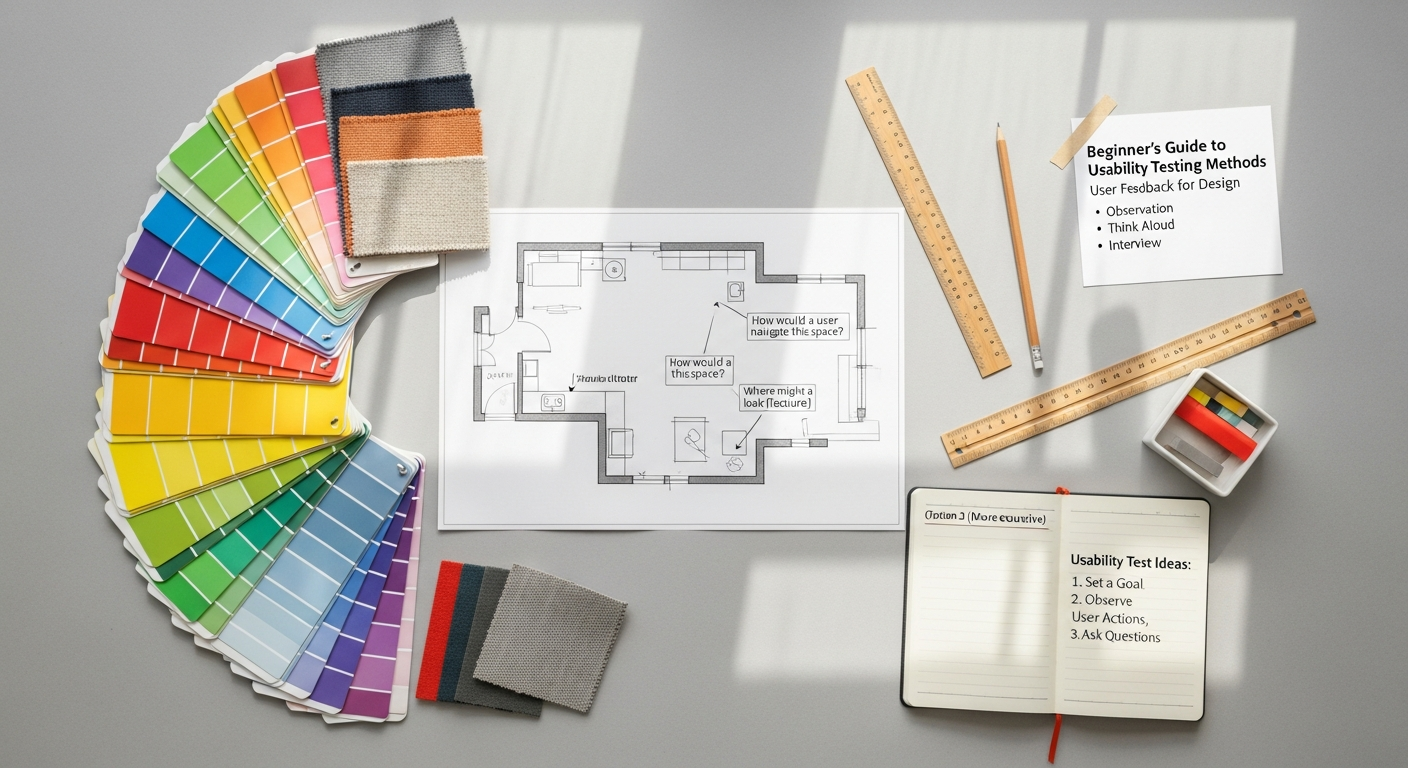
This process is deeply intertwined with the broader concept of User Experience (UX) Design. If you’ve ever wondered What Is UX Design And Why It Matters, usability testing is one of its most potent tools. UX design encompasses the entire journey a user takes with a product, and usability is a significant component of that journey. A beautiful design that is difficult to use will ultimately lead to frustration and abandonment. Conversely, a highly usable design, even if not groundbreaking aesthetically, can create loyalty and satisfaction. For instance, an interior designer might meticulously plan a room, but without understanding how the inhabitants will move, store items, or utilize lighting, the space might be visually appealing but functionally flawed. Similarly, a website with stunning graphics will fail if visitors can’t find the information they need.
The benefits of integrating usability testing into your creative process are manifold. It helps to:
- Identify problems early: Catching issues in the design phase is significantly cheaper and easier than fixing them after launch or construction.
- Improve user satisfaction: When users find a product intuitive and easy to use, their satisfaction levels soar, leading to positive word-of-mouth and repeat engagement.
- Reduce development costs: By preventing costly redesigns and reworks that stem from misunderstood user needs.
- Increase efficiency: Users can accomplish their goals faster and with less frustration.
- Gain competitive advantage: Products that are genuinely user-friendly stand out in crowded markets.
In 2026, as digital and physical environments become increasingly complex, the demand for truly user-centric designs will only intensify. Mastering usability testing is not just a skill; it’s a fundamental commitment to creating designs that truly serve their purpose and delight their users.
Before You Begin: Setting the Stage for Effective Usability Testing
Jumping straight into testing without proper preparation is like trying to bake a cake without a recipe – you might end up with something, but it’s unlikely to be what you intended. For beginners, a structured approach to planning is crucial for maximizing the insights gained from usability testing.
1. Define Your Objectives
What exactly do you want to learn? Your objectives should be specific, measurable, achievable, relevant, and time-bound (SMART). Instead of “I want to know if my website is good,” aim for “I want to determine if users can successfully complete a purchase within five clicks on my e-commerce site” or “I want to identify pain points users encounter when navigating to the contact page.” Clear objectives will guide your entire testing process.
2. Identify Your Target Users/Participants
Who is your design for? It’s crucial to test with people who represent your actual target audience. If you’re designing a mobile app for busy professionals, testing with teenagers might yield irrelevant feedback. Define demographic characteristics (age, occupation, tech-savviness) and behavioral characteristics (goals, motivations, pain points). Aim for diversity within your target group to capture a broader range of perspectives. For most beginner tests, 5-8 participants can reveal a significant percentage of usability issues.
3. Choose Tasks and Scenarios
Based on your objectives, create realistic tasks that participants will attempt to complete. These should mimic real-world interactions. Instead of “Click the ‘Buy Now’ button,” try “Imagine you’re looking to buy a new desk lamp. Find a suitable lamp on our website and add it to your cart.” Provide a scenario that gives context to the task, making it more relatable. Ensure tasks are clear, concise, and don’t give away the solution. If you’re testing an interior layout, tasks might involve “finding the coffee maker” or “storing your groceries.”
4. Select Your Metrics
How will you measure success? Common usability metrics include:
- Task Success Rate: Did the user successfully complete the task?
- Time on Task: How long did it take them to complete it?
- Error Rate: How many mistakes did they make?
- Subjective Satisfaction: How easy or difficult did they perceive the task to be? (Often measured with questionnaires like the System Usability Scale – SUS).
Deciding on these metrics beforehand will help you collect structured data and analyze your findings more effectively.
5. Prepare Your Test Environment and Materials
Whether it’s an online platform for remote testing or a physical space, ensure it’s set up to minimize distractions and facilitate clear observation. Prepare any necessary consent forms, pre-test questionnaires to screen participants, and post-test questionnaires to gather qualitative feedback. If you’re recording the session (highly recommended), ensure your equipment is working correctly.
Thorough preparation not only makes the testing process smoother but also ensures that the data you collect is relevant, reliable, and actionable. It lays the groundwork for truly understanding user behavior and making informed design decisions.
Top Usability Testing Methods for Beginners
A. Moderated Remote Usability Testing
What it is: In this method, a moderator guides participants through tasks in real-time, but remotely, typically via video conferencing tools. The moderator can observe the user’s screen, listen to their comments, and ask follow-up questions to probe their thoughts and reasoning.
How to do it:
- Recruit participants who match your target audience.
- Schedule individual sessions via video conferencing (e.g., Zoom, Google Meet).
- At the start of the session, explain the purpose of the test (to test the design, not them), assure confidentiality, and obtain consent.
- Present tasks one by one, encouraging participants to “think aloud” as they navigate.
- Observe carefully, take notes, and ask non-leading follow-up questions to understand their decisions and frustrations.
- Record the session (with permission) for later analysis.
Pros:
- Allows for deep qualitative insights through direct interaction and follow-up questions.
- Flexible, as participants can be located anywhere.
- Moderator can provide assistance if a user gets stuck, preventing complete frustration.
Cons:
- Can be time-consuming to schedule and conduct individual sessions.
- Requires a skilled moderator to avoid bias and steer the conversation effectively.
- Technical issues (internet connectivity, software) can disrupt sessions.
B. Unmoderated Remote Usability Testing
What it is: This method involves participants completing tasks on their own, at their convenience, using specialized testing platforms. The platform records their screen, mouse clicks, and often their voice as they think aloud. There is no direct interaction with a moderator during the test.
How to do it:
- Choose an unmoderated testing platform (e.g., UserTesting, Lookback, Maze).
- Set up your test by uploading your design (prototype, website, app), defining tasks, and writing clear instructions.
- Specify your participant demographics; the platform often helps with recruitment.
- Launch the test and wait for participants to complete it.
- Review the recorded sessions and analyze the data.
Pros:
- Highly scalable and efficient for gathering data from many users quickly.
- Cost-effective compared to moderated testing, especially for larger participant numbers.
- Participants can complete tasks in their natural environment, potentially leading to more realistic behavior.
Cons:
- Lacks the ability to ask follow-up questions in real-time, potentially missing deeper insights.
- Participants might not follow instructions or think aloud effectively.
- Requires a well-designed test script to ensure clarity and gather useful data.
C. Think-Aloud Protocol
What it is: This is a technique often used within both moderated remote and in-person usability testing. Participants are instructed to continuously verbalize their thoughts, feelings, and actions as they interact with the design. This provides a direct window into their cognitive processes.
How to do it:
- Before starting tasks, explain to the participant that you want them to “think aloud” – say everything that comes to mind, even if it seems trivial.
- Emphasize that you are interested in their process, not just the outcome.
- As they complete tasks, gently remind them to keep talking if they fall silent (“What are you thinking now?” or “What are you looking at?”).
- Record their verbalizations along with their screen activity.
Pros:
- Provides rich qualitative data, revealing underlying motivations, assumptions, and points of confusion.
- Helps understand why users make certain decisions, not just what they do.
Cons:
- Can be unnatural for some participants, requiring practice and encouragement.
- The act of thinking aloud might slightly alter natural behavior.
- Data can be extensive and challenging to analyze.
D. Card Sorting
What it is: Card sorting is a method used to understand how users categorize and organize information. Participants are given a set of “cards” (each representing a piece of content or functionality, like “Bedroom Furniture,” “Customer Service,” “Return Policy”) and asked to group them in a way that makes sense to them, and then often to label these groups.
How to do it:
- Identify the content or features you want to organize. Write each item on a separate card (physical or digital).
- Open Card Sort: Participants group cards and create their own category labels.
- Closed Card Sort: Participants group cards into pre-defined categories.
- Hybrid Card Sort: Participants group cards into pre-defined categories but can also create new ones.
- Observe or record how participants sort the cards and listen to their reasoning.
- Analyze the patterns of grouping and labeling to inform your information architecture.
Pros:
- Excellent for informing Information Architecture Explained, helping to structure websites, apps, or even physical spaces logically.
- Relatively easy and inexpensive to set up and conduct.
- Provides direct insights into users’ mental models for information organization.
Cons:
- Doesn’t test actual task completion or interface interaction.
- Results require careful analysis to translate into design decisions.
E. First Click Testing
What it is: This method focuses on the very first action a user takes when trying to complete a task. It’s based on the principle that if users can make the correct first click, their chances of successfully completing the task significantly increase. It helps evaluate the intuitiveness of navigation and labeling.
How to do it:
- Present participants with a specific task (e.g., “Where would you click to find information about our pricing plans?”).
- Show them a static image or a low-fidelity prototype of your interface (e.g., a homepage, a menu screen).
- Record where they click first. Do not allow them to navigate further.
- Analyze the percentage of correct first clicks and where incorrect clicks occurred.
Pros:
- Quick and easy to conduct, often using online tools.
- Highly effective for identifying issues with navigation, labeling, and information scent.
- Provides quantitative data on initial user decision-making.
Cons:
- Only captures the very first interaction, not the entire user journey.
- Doesn’t provide qualitative reasons behind the clicks without follow-up.
F. Five-Second Test
What it is: This method assesses a user’s initial perception and recall of a design element (like a homepage, a landing page, an advertisement, or even Social Media Graphics Design Guide visuals) after seeing it for just five seconds. It’s about understanding first impressions.
How to do it:
- Show participants a design (image or screenshot) for exactly five seconds.
- Immediately after, hide the design and ask them a series of recall and impression-based questions (e.g., “What was the main purpose of this page?”, “What did you remember seeing?”, “What was your overall impression?”).
- Collect and analyze their responses for common themes and immediate takeaways.
Pros:
- Extremely fast and easy to conduct, even with many participants.
- Excellent for evaluating clarity, hierarchy, and messaging effectiveness.
- Provides insights into initial user engagement and understanding.
Cons:
- Only captures a superficial first impression, not deep interaction.
- Limited in scope; not suitable for evaluating complex task flows.
For beginners, starting with one or two of these methods that align best with your current design stage and objectives will provide invaluable experience. Remember, the goal is not perfection, but continuous improvement.
Analyzing Your Findings: Turning Data into Actionable Insights
Collecting data is only half the battle; the real value of usability testing comes from effectively analyzing that data and translating it into actionable design recommendations. For beginners, this step can feel overwhelming, but a systematic approach will make it manageable.
1. Document Observations Systematically
During or immediately after each test session, record your observations. For moderated tests, this might involve detailed notes on user actions, verbalized thoughts, errors, and task completion times. For unmoderated tests, review recordings and log key events. Use a consistent template or spreadsheet to track:
- Participant ID
- Task performed
- Success/Failure (and reason for failure)
- Time on task
- Observed errors/pain points
- Direct quotes from participants
- Severity of the issue (e.g., low, medium, high)
2. Identify Patterns and Pain Points
Once you’ve collected data from all participants, look for recurring themes. What problems did multiple users encounter? What parts of the design caused consistent confusion or frustration? These patterns highlight systemic issues rather than isolated incidents. Categorize issues by type (e.g., navigation, labeling, content clarity, functionality) and by location within your design.
For instance, if three out of five users struggled to find the “Checkout” button, that’s a significant pattern. If multiple users expressed confusion over the terminology used for a particular product category during card sorting, it signals an information architecture problem that needs addressing.
3. Prioritize Issues
Not all usability issues are created equal. Some are minor annoyances, while others are critical blockers. Prioritize issues based on their:
- Frequency: How many users encountered this problem?
- Impact/Severity: How much did it hinder task completion or user satisfaction? (e.g., a user couldn’t complete a purchase vs. a user found a button slightly hard to click).
- Feasibility of Fix: How difficult or costly would it be to implement a solution?
Focus on addressing high-frequency, high-impact issues first. A simple matrix (e.g., severity vs. frequency) can help visualize and prioritize.
4. Translate Findings into Design Recommendations
This is where you bridge the gap between observation and action. For each prioritized issue, propose concrete, actionable solutions. Instead of just saying “Navigation is confusing,” specify “Rename ‘Services’ to ‘Our Offerings’ based on card sorting results,” or “Increase the contrast of the ‘Add to Cart’ button to make it more prominent.”
When formulating recommendations, consider the broader context of your design principles and user goals. How does this change align with your overall vision? Don’t be afraid to brainstorm multiple solutions for a single problem.
5. Communicate Your Findings
Prepare a concise report or presentation summarizing your methodology, key findings (backed by data and quotes), prioritized issues, and recommended solutions. Use visuals like screenshots or short video clips from your tests to illustrate pain points. This report is crucial for convincing stakeholders or team members about the necessity of design changes.
Remember, the analysis phase is iterative. You might uncover new questions that necessitate further testing. Embrace the process of continuous learning and refinement.
Best Practices for Successful Usability Testing (Even for Rookies)
While the methods and analysis are crucial, adopting certain best practices can significantly enhance the effectiveness of your usability testing, especially when you’re just starting out.
1. Recruit Diverse and Representative Participants
Avoid testing only with friends, family, or colleagues who are already familiar with your work or domain. Seek out individuals who truly represent your target audience, including a range of demographics, technical abilities, and prior experiences. A diverse participant pool will reveal a broader spectrum of usability issues.
2. Keep Tasks Realistic and Goal-Oriented
Design tasks that mirror real-world scenarios. Instead of instructing users to “click this button,” give them a goal to achieve, like “find the cheapest flight to London next month.” This helps to observe natural behavior rather than simply following instructions.
3. Avoid Leading Questions and Interventions
During moderated tests, maintain neutrality. Phrase questions objectively (e.g., “What are you looking for here?” instead of “Are you looking for the contact page?”). Avoid helping users unless they are completely stuck, and even then, make it a minimal intervention. Your role is to observe, not to teach.
4. Be Empathetic and Neutral
Create a comfortable and non-judgmental environment for participants. Assure them that you are testing the design, not them, and there are no right or wrong answers. Their honesty is the most valuable contribution. Avoid defensiveness if they criticize your design; instead, listen actively and try to understand their perspective.
5. Test Early and Often
Don’t wait until your design is “perfect” before testing. Conduct usability tests on low-fidelity prototypes, wireframes, or even sketches. Early testing allows for cheaper and easier iterations. As your design evolves, continue testing to ensure new features or changes haven’t introduced new usability problems. This iterative approach is key to continuous improvement, much like refining a Social Media Graphics Design Guide for optimal engagement.
6. Focus on Key Functionality First
For beginners, it’s tempting to try and test everything. Instead, focus your initial efforts on the core functionality or the most critical user flows. What are the essential tasks users must be able to complete? Master testing these elements before moving on to more peripheral features.
7. Record and Document Everything (with permission)
Video and audio recordings are invaluable for revisiting sessions, noting details you might have missed, and sharing insights with your team. Always ensure you have explicit consent from participants before recording. Detailed notes and observation logs are also crucial for robust analysis.
8. Iterate Based on Feedback, But Don’t Over-Optimize for Every Suggestion
Usability testing provides data, but you, as the designer, still need to make informed decisions. Not every piece of feedback needs to be implemented. Look for patterns and prioritize issues that affect a significant number of users or severely hinder their goals. Balance user feedback with business objectives, technical constraints, and your creative vision.
By adhering to these best practices, you’ll be well on your way to conducting effective usability tests that yield meaningful insights, ultimately leading to more intuitive, user-friendly, and successful designs.
Integrating Usability Testing into Your Creative Workflow
For those in interior design, creative branding, or digital product development, usability testing might seem like an external, optional step. However, the most successful creative endeavors are those that seamlessly integrate user feedback throughout their lifecycle. Usability testing isn’t a one-off event; it’s a continuous process that should be woven into the fabric of your design workflow.
From Concept to Iteration: A Continuous Loop
Imagine you’re designing a new retail space. Early on, you might use simplified usability tests like card sorting to understand how customers mentally group product categories (linking to Information Architecture Explained principles for physical spaces). Later, as you develop floor plans, you could walk through a prototype or even a sketched layout with potential customers, asking them to “find the changing rooms” or “where would you look for cashmere sweaters.” This early feedback can prevent costly structural changes down the line.
In digital design, this translates to:
- Discovery Phase: Use methods like user interviews and competitive analysis alongside initial usability checks on existing solutions to understand pain points.
- Ideation/Prototyping Phase: Test low-fidelity wireframes or paper prototypes with methods like moderated remote testing or the think-aloud protocol. This is where you test core concepts and flows.
- Development Phase: As you build out your product, conduct unmoderated remote tests on specific features or user journeys. Perform first-click tests on new navigation elements.
- Launch & Post-Launch: Even after launch, continuous testing is vital. Use five-second tests to gauge the immediate impact of new landing pages or Social Media Graphics Design Guide updates. Monitor analytics alongside ongoing usability tests to identify areas for improvement in future iterations.
Usability Testing as a Creative Catalyst
Far from stifling creativity, usability testing can actually act as a powerful catalyst. By grounding your designs in real user needs and behaviors, you gain a clearer understanding of the problem space, which can inspire more innovative and effective solutions. It helps designers move beyond personal biases and assumptions, fostering a design process that is truly empathetic.
For example, if testing reveals that users consistently overlook a beautifully designed but obscure menu item, it challenges the designer to find a more intuitive and visually prominent way to present that option, potentially leading to a more elegant and functional solution. It pushes you to innovate within constraints, much like a graphic designer must innovate within the limitations of different social media platforms.
Building a Culture of User-Centricity
By regularly conducting usability tests, you help instill a culture of user-centricity within your team or organization. It emphasizes that design is not just about aesthetics, but about functionality, accessibility, and the overall experience. This collaborative approach, where designers, developers, and even marketing teams contribute to and learn from user feedback, leads to more holistic and successful outcomes.
In 2026, the lines between physical and digital experiences continue to blur. A well-designed interior space shares many principles with a well-designed website – clear navigation, intuitive functionality, and an overall sense of comfort and ease. Usability testing provides the universal language to assess and enhance these experiences, ensuring your creative impact is not just seen, but truly felt and appreciated by every user.
Embracing usability testing as a beginner is an investment in your creative future. It equips you with the tools to craft designs that are not only beautiful but also profoundly effective, ensuring your work stands the test of time and truly serves the people for whom it is intended.
Frequently Asked Questions
Recommended Resources
You might also enjoy How To Use Ai For Writing Content from Bookmark Sharer.
Learn more about this topic in How To Create A Youtube Channel For Your Business at Eamped.