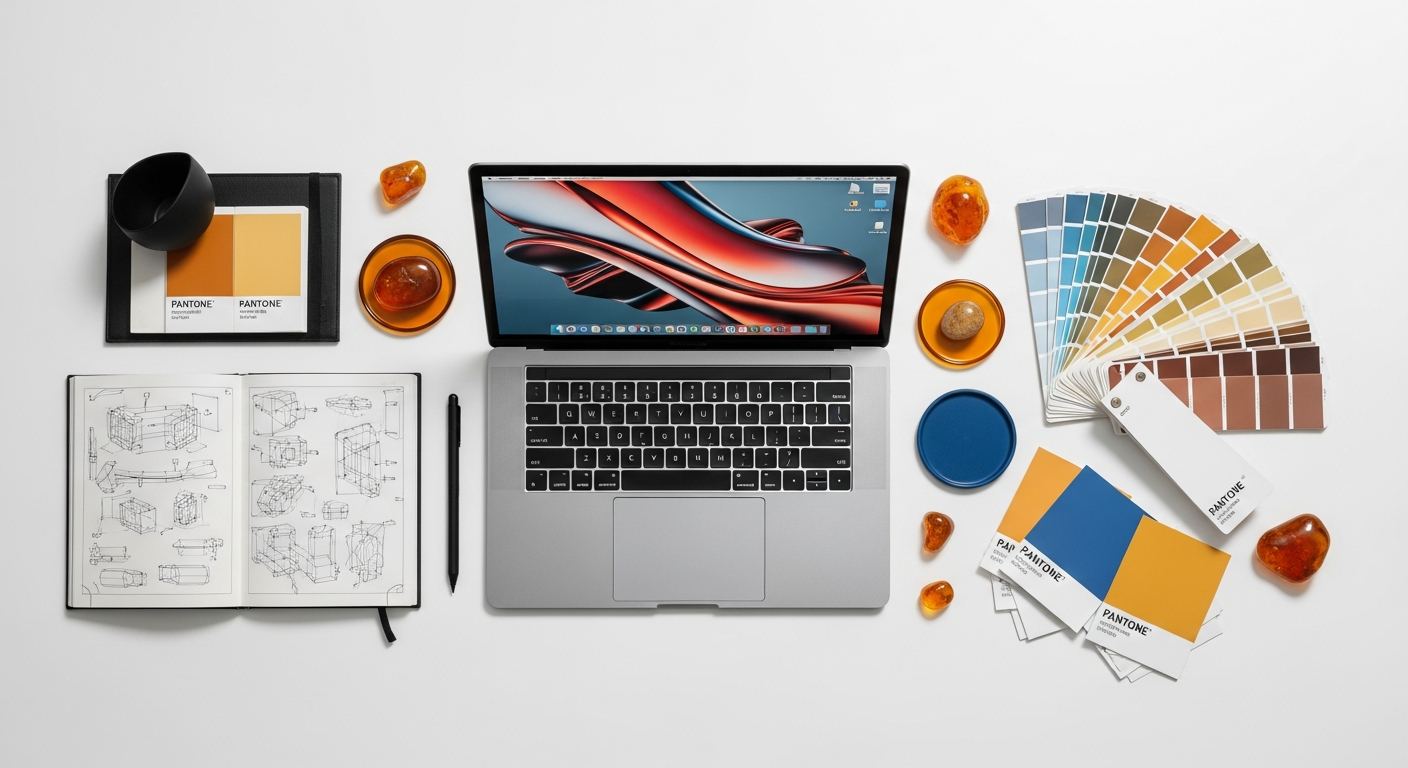
Beyond the Screen: Top Web Design Trends for 2026

The landscape of the web is undergoing its most significant shift since the introduction of the smartphone. As we move into 2026, the boundaries between the physical and digital, the static and the generative, and the designer and the algorithm are blurring. For web designers and frontend developers, 2026 represents a departure from the “cookie-cutter” layouts of the last decade. We are entering an era of **Human-Centric Intelligence**, where websites are no longer mere destinations but adaptive, spatial, and environmentally conscious experiences.

The maturation of WebXR, the normalization of Generative UI, and a renewed focus on digital sustainability are the pillars of this new era. This year is about moving beyond the “flat” web and embracing depth, movement, and extreme personalization. In this guide, we explore the definitive web design trends for 2026 that will redefine how we build, interact with, and experience the internet.

1. Generative UI and Dynamic Component Orchestration

By 2026, the concept of a “static” landing page is effectively obsolete. We have moved past AI-generated copy and images into the realm of **Generative UI (GenUI)**. In this paradigm, the user interface is not a fixed set of components but a fluid entity that reconstructs itself in real-time based on user intent, device context, and historical behavior.

For frontend developers, this means a shift from building pages to building “intelligent component libraries.” Utilizing tools like Vercel’s v0 or advanced proprietary LLMs, interfaces in 2026 will adapt their hierarchy instantly. If a user arrives at an e-commerce site with a “troubleshooting” intent, the UI might minimize promotional banners and programmatically elevate the documentation and live-chat components.

**The Technical Edge:**
This trend relies heavily on **Server-Driven UI (SDUI)** and advanced edge computing. Developers are now utilizing JSON-based schemas to tell the frontend which components to render on the fly. This reduces the client-side heavy lifting and allows for hyper-personalized experiences without the massive JavaScript bundles traditionally required for multi-variant testing.

2. Spatial UI and the “Z-Axis” Revolution

With the mainstream adoption of spatial computing headsets and the integration of XR (Extended Reality) features into standard mobile browsers, web design has finally broken the two-dimensional plane. Spatial UI is the dominant aesthetic of 2026, characterized by depth, translucency, and the “Z-axis.”

We are seeing a move away from traditional “Glassmorphism” toward **Volumetric Design**. This involves using CSS `translateZ`, refined shadow casting, and real-time environmental lighting reflections to make web elements feel like they occupy physical space. The goal is “Passthrough Readiness”—designing interfaces that look just as native on a 2D MacBook screen as they do floating in a 3D workspace.

**Key Design Elements:**
* **Micro-Depth Ornaments:** Small, 3D interactive elements that react to cursor proximity or gyroscope tilt.
* **Eye-Gaze Affordance:** Buttons that subtly glow or expand when a user’s gaze (in XR) or cursor (on desktop) lingers, mimicking physical feedback.
* **Spatial Audio Integration:** Using the Web Audio API to provide directional sound cues that correspond with the visual depth of UI elements.

3. Low-Impact and Carbon-Aware Frontend Architecture

In 2026, sustainability is no longer a corporate social responsibility (CSR) checkbox; it is a core performance metric. As global regulations on digital carbon footprints tighten, “Green Web Design” has evolved into **Carbon-Aware Design**.

This trend focuses on reducing the energy consumption of both the server and the end-user’s device. Developers are prioritizing “Light Mode by Request,” where the default state of a site is a high-contrast, low-energy dark mode or a “text-only” fallback. We are seeing a resurgence of “Vanilla-plus” development—eschewing heavy frameworks for native Web Components and CSS-only solutions to minimize CPU cycles.

**Implementation Strategies:**
* **Variable Font Optimization:** Replacing multiple font weights with a single variable font file to reduce HTTP requests.
* **Vector-First Assets:** Using Lottie animations and SVGs instead of heavy video files or GIFs.
* **Delayed Hydration:** Only activating interactive JavaScript elements when they enter the viewport, saving battery life on mobile devices.
* **Carbon-Tracking Headers:** Sites that display a real-time “CO2 per page view” counter in the footer, fostering transparency and user trust.

4. Bento 2.0: Modular Fluidity and CSS Subgrid

The “Bento Box” layout—characterized by rounded rectangles and modular grids—has matured. In 2026, we have moved into **Bento 2.0**, which leverages the full power of CSS Subgrid and Container Queries to create layouts that are truly “squishy.”

Unlike the rigid grids of the past, Bento 2.0 layouts are fluid. Components can now share alignment across nested containers, allowing for complex, magazine-style layouts that were previously impossible to maintain responsively. This trend favors a “Content-First” approach, where the grid adapts to the size of the media, rather than forcing the media into a predefined box.

**Why it works in 2026:**
It provides a sense of organized chaos. With the rise of information density, users need a way to scan content quickly. The Bento layout categorizes information into digestible chunks, making it perfect for dashboards, portfolios, and data-heavy SaaS platforms. Developers are increasingly using `display: contents` and `grid-template-areas` to create these adaptive modules without breaking accessibility trees.

5. Kinetic Typography and Motion-Sensory Interfaces

Typography in 2026 is no longer just about legibility; it’s about expression. **Kinetic Typography** has become a primary UI element, where text reacts to user interaction, scroll speed, and even ambient noise.

We are seeing a move toward “Liquid Type,” where fonts behave like fluids—stretching, warping, and morphing as the user scrolls. This is powered by advanced CSS scroll-driven animations and the refinement of the `font-variation-settings` property. However, the trend is tempered by a focus on “Reduced Motion” preferences. Designers are creating two versions of these kinetic experiences: one high-energy and one static and accessible, ensuring no user is left behind.

**Frontend Focus:**
The use of the **GSAP (GreenSock Animation Platform)** and **Framer Motion** has become standard for achieving these physics-based interactions. Developers are now treating typography as a canvas, often utilizing WebGL and Three.js to render 3D type that can be “pushed” or “pulled” by the user’s cursor.

6. Neuro-Inclusive Design Systems

As our understanding of cognitive diversity expands, the web of 2026 is becoming significantly more inclusive. **Neuro-Inclusive Design** goes beyond standard WCAG accessibility. It focuses on catering to users with ADHD, autism, dyslexia, and other cognitive profiles by offering “Sensory Modes.”

Websites are now being built with a “Sensory Toggle” that allows users to switch between:
* **Focus Mode:** Removes all non-essential animations, simplifies the color palette, and uses high-legibility typefaces like Atkinson Hyperlegible.
* **Interactive Mode:** The full, motion-rich experience.
* **Low-Dopamine Mode:** A minimalist version of the site designed to prevent cognitive overload, featuring monochromatic schemes and structured, predictable navigation.

This trend reflects a broader shift toward “Intentional Friction.” Instead of trying to keep users on a site for as long as possible (the “attention economy”), 2026 web design respects the user’s mental health by providing clear exits and reducing overwhelming stimuli.

FAQ: Navigating the 2026 Web Design Landscape

**Q1: Will AI replace web designers and frontend developers by the end of 2026?**
No, but it will fundamentally change the job description. The role is shifting from “execution” to “curation and orchestration.” Designers will spend less time drawing rectangles and more time defining the logic, constraints, and “soul” of a generative system. Developers will focus on building the robust component architectures that these AI systems utilize.

**Q2: How do I prepare my portfolio for the Spatial UI trend?**
Start experimenting with the **WebXR Device API** and Three.js. Even if you aren’t building a full VR experience, adding 3D elements that respond to cursor movement or scroll can demonstrate your readiness for the “Z-axis” shift. Focus on understanding lighting, textures, and depth in a browser environment.

**Q3: Is “Green Web Design” really that important for SEO in 2026?**
Yes. Search engines have integrated “Carbon Score” as part of their Core Web Vitals. A lighter, faster, and more energy-efficient site doesn’t just help the planet; it ranks higher because it provides a superior user experience, especially on low-bandwidth connections or older hardware.

**Q4: What is the most important CSS feature to master for 2026 layouts?**
**CSS Subgrid** and **Scroll-Driven Animations**. Subgrid allows for nested layouts that stay perfectly aligned, which is essential for the Bento 2.0 trend. Scroll-driven animations allow you to create high-performance, complex motion effects without relying on heavy external JavaScript libraries.

**Q5: How does Neuro-Inclusive design differ from traditional Accessibility (A11y)?**
Traditional A11y focuses on physical impairments (blindness, motor issues). Neuro-inclusion focuses on how the brain processes information. It’s about reducing “digital noise,” providing clear information hierarchies, and giving users control over their sensory experience. It’s the next evolution of a truly universal web.

Conclusion: The Era of Intelligent Empathy

As we look at the trajectory of web design in 2026, a clear theme emerges: the “One Size Fits All” web is dead. We are moving toward a web that is as diverse and adaptable as the people who use it.

The successful designers and developers of 2026 will be those who can balance the raw power of Generative AI and Spatial Computing with the human need for simplicity, sustainability, and inclusivity. We are no longer just building pages; we are building digital ecosystems that breathe, adapt, and respect the user.

For the frontend community, the challenge is exciting. It requires us to be more than just coders; we must be architects of experience, stewards of the environment, and advocates for cognitive diversity. The web of 2026 is faster, deeper, and smarter—but most importantly, it is finally becoming more human.

By embracing these trends—from Generative UI to Neuro-Inclusive systems—you aren’t just staying relevant; you are helping build a more thoughtful, immersive, and accessible digital future. The screen is no longer a barrier; it is a gateway to a multi-dimensional experience. It’s time to start building for it.