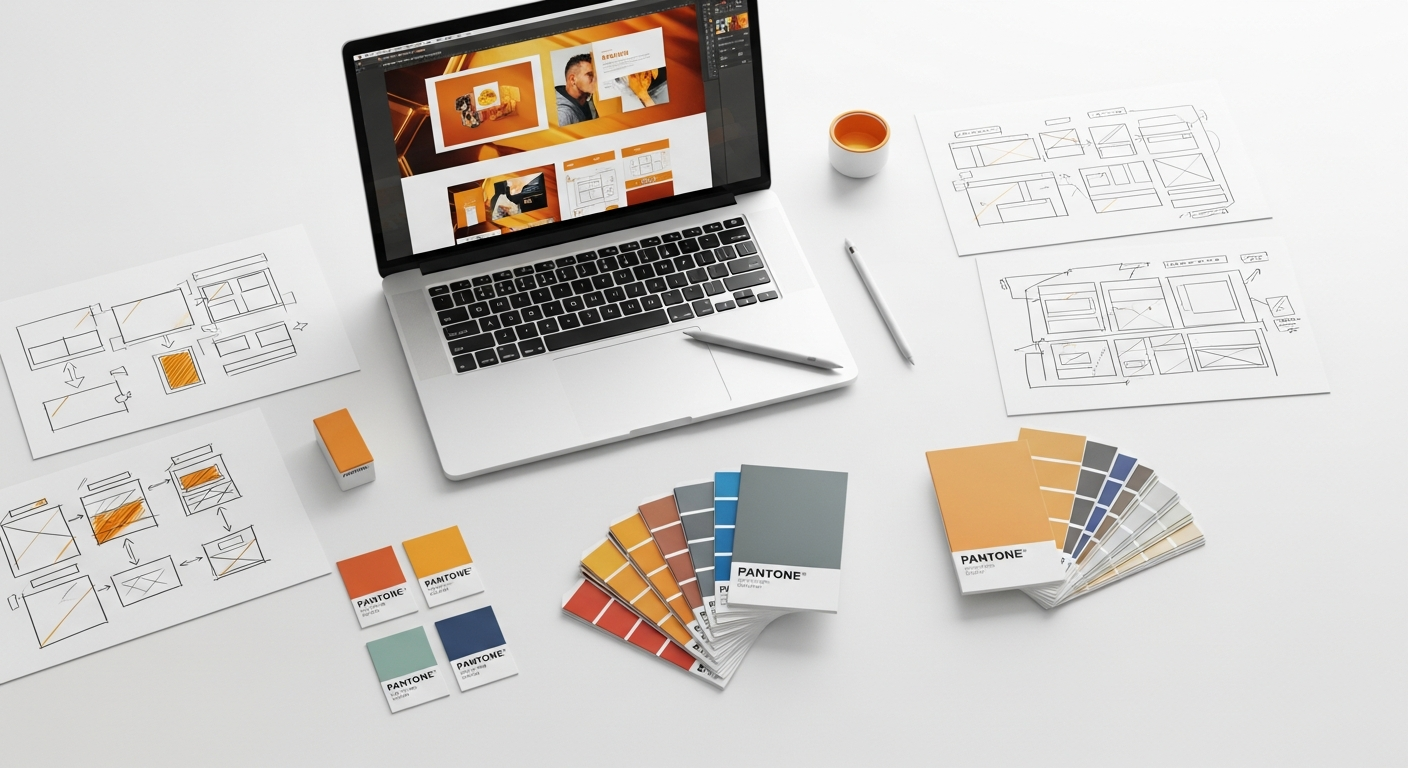
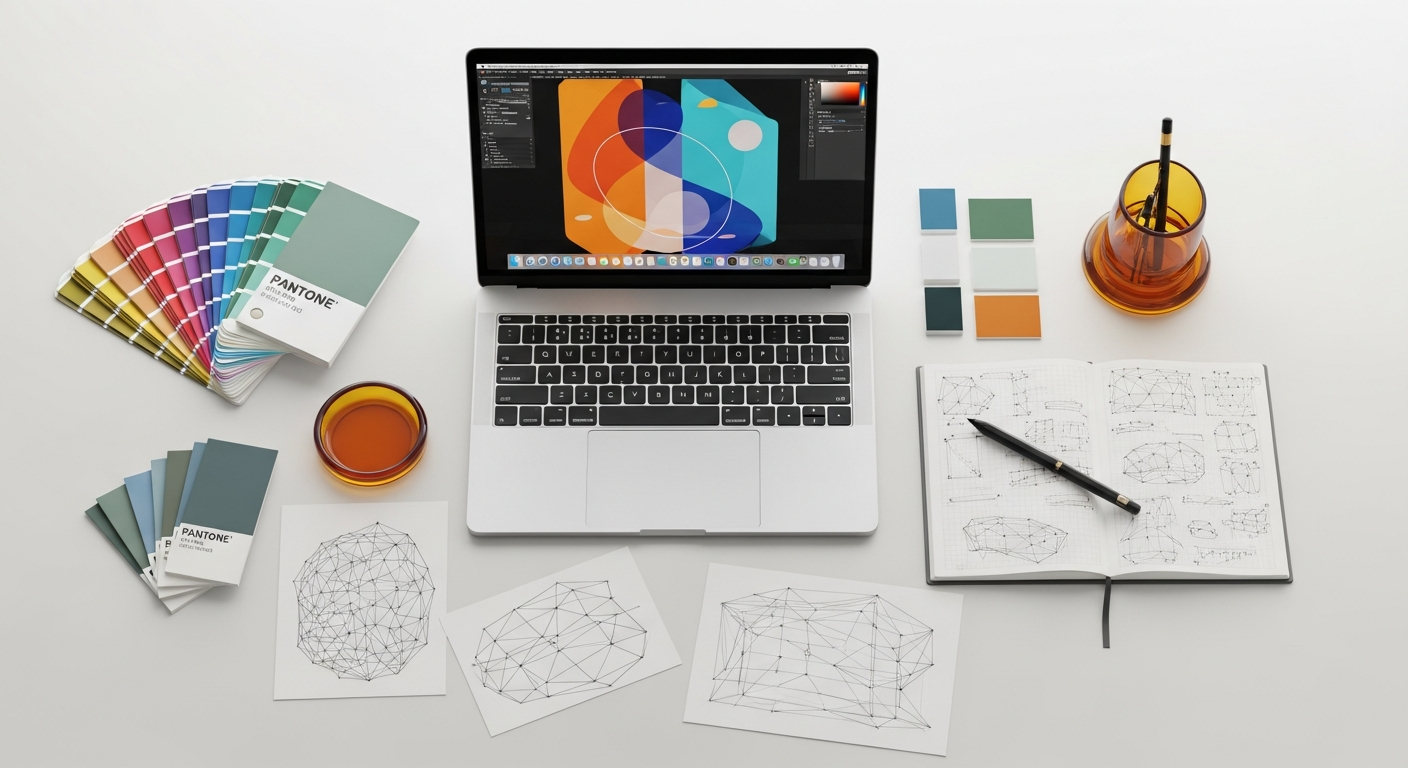
Future-Proofing Innovation: The Definitive Guide to Building Scalable Design Systems in 2026
The digital landscape of 2026 has moved far beyond the era of static UI kits and basic component libraries. For today’s web designers and frontend developers, a design system is no longer just a collection of buttons and color swatches; it is a living, breathing operating system for the product. As we navigate a world defined by multi-modal interfaces, generative AI integration, and extreme device fragmentation, the need for scalability has shifted from “nice to have” to a core business survival strategy. Building a scalable design system in 2026 requires a transition from manual curation to automated orchestration. The goal is to create a framework that can support thousands of screens across web, mobile, and spatial computing environments without increasing technical or design debt. This article explores the architectural shifts, technological advancements, and cultural changes necessary to build and maintain a world-class design system in the current year.
1. The Era of Context-Aware Design Tokens
In 2026, design tokens have evolved from simple key-value pairs into intelligent, context-aware entities. Early iterations of tokens focused on static values like `color-blue-500` or `spacing-margin-sm`. Today, scalable systems utilize “Dynamic Token Logic.” These tokens are programmatic units that understand the environment in which they are being rendered.
Scalability in 2026 means your design tokens should automatically adjust based on user preferences, environmental lighting, and device capabilities. For instance, a “surface-elevation” token might automatically increase its contrast ratio if it detects a user with vision impairment or if the device is being used in direct sunlight. This level of automation is achieved through deeper integration between CSS Houdini and server-side token engines.
Furthermore, the management of these tokens has moved out of JSON files and into centralized Token Management Systems (TMS). These platforms act as a single source of truth that pushes updates simultaneously to Figma, GitHub, and mobile SDKs. By treating tokens as the “atomic DNA” of the system, teams can execute brand-wide updates in minutes rather than weeks, ensuring that scalability never comes at the cost of consistency.
2. AI-Augmented Component Libraries and Generative UI
The manual labor of building every variant of a component—hover states, disabled states, loading skeletons—is a thing of the past. In 2026, the most scalable design systems leverage Generative UI. Designers now focus on defining the “constraints” and “intent” of a component, while AI engines generate the necessary permutations.
For frontend developers, this means the component library is no longer a static NPM package of 50 components. Instead, it is a generative engine. When a developer needs a specific UI pattern, they call a base component with intent-based props. For example, ``. The design system’s AI layer then references the brand’s core principles and user data to render the most effective version of that button.
This approach solves the “permutation explosion” problem that plagued systems in earlier years. By utilizing AI to handle the mundane tasks of variant creation and edge-case styling, designers and developers are free to focus on high-level architecture and user experience flow. Scalability is no longer limited by the number of components you can manually code, but by the robustness of the rules you feed into your generative engine.
3. Headless Design Systems: Decoupling Logic from Presentation
As we build for an increasingly diverse range of surfaces—including the traditional web, foldable screens, and AR/VR environments—the “Headless” architecture has become the gold standard for design systems in 2026. A scalable system must decouple its functional logic (accessibility, state management, keyboard navigation) from its visual presentation.
By using headless libraries (such as evolved versions of Radix or React Aria), teams can maintain a single, rigorously tested logic layer while applying different “skins” or “themes” depending on the platform. This is crucial for scalability because it prevents the duplication of complex code. If a developer is building a dropdown menu for a web app and a high-performance 3D dashboard for a headset, they use the exact same logic package.
This separation of concerns allows the design system to scale horizontally across different tech stacks. Whether your team is using React 19, Vue, or a futuristic web-assembly framework, the core logic of the design system remains constant. This architectural choice ensures that the system is resilient to the rapid turnover of frontend frameworks, making it truly future-proof.
4. Automated Governance and Self-Healing Documentation
One of the biggest bottlenecks to scaling a design system has always been governance: ensuring that everyone is using the system correctly and keeping the documentation up to date. In 2026, the industry has solved this through “Self-Healing Documentation” and “Automated Governance” pipelines.
In a modern 2026 workflow, documentation is not something you write; it is something that is harvested from the code and design files automatically. Using LLMs (Large Language Models) specifically trained on your system’s codebase, the documentation updates itself whenever a pull request is merged. If a developer introduces a new prop to a component, the AI detects the change, writes the usage guidelines, generates a live code playground, and updates the accessibility checklist.
Furthermore, governance is enforced through “Visual Regression AI” within the CI/CD pipeline. Instead of simple snapshot testing, these AI agents analyze UI changes against the design system’s core principles. If a developer attempts to ship a custom hex code that isn’t in the token set, or if they break a layout constraint, the build is automatically flagged. This proactive enforcement allows the system to scale to hundreds of contributors without the need for a massive, manual “Design System Squad” to gatekeep every change.
5. Performance-First Engineering: The Green Design System
In 2026, scalability is also measured by a system’s environmental impact and performance footprint. As digital sustainability regulations become more stringent, building “heavy” design systems is no longer viable. Scalable systems now prioritize “Micro-Bundling” and “Zero-Runtime CSS.”
Modern design systems in 2026 use sophisticated tree-shaking algorithms that ensure a user only downloads the exact bytes of the components they interact with. We have moved away from monolithic CSS-in-JS libraries toward compile-time styling solutions that produce zero overhead.
Designing for performance means that scalability includes the ability to function on low-power devices and in regions with limited connectivity. By optimizing the design system for the “low-end” of the spectrum, you ensure it is robust enough for the “high-end.” This includes native support for “Light Mode” defaults to save battery on OLED screens and the use of variable fonts to reduce HTTP requests. A scalable system in 2026 is a lean system, proving that high-end design does not have to come at the cost of the planet or the user’s data plan.
6. The “Live-Sync” Workflow: Bridging the Designer-Developer Divide
The concept of a “handoff” has become obsolete in 2026. To achieve true scale, the friction between design tools (like Figma) and development environments (like VS Code) had to be eliminated. We now operate in a “Live-Sync” ecosystem where the design tool and the code repository are two views of the same data.
When a designer tweaks a padding value in their design environment, a pull request is automatically generated in GitHub with the updated token values. Conversely, when a developer optimizes a component’s layout logic, the changes are reflected back into the designer’s workspace in real-time. This bidirectional synchronization is the ultimate scaler. It eliminates the “broken telephone” effect where designs and code diverge over time.
This workflow is supported by “Design System as a Service” (DSaaS) platforms that sit between the design and engineering teams. These platforms provide a unified API for the design system, allowing it to be consumed by marketing teams in CMS platforms, developers in IDEs, and product managers in prototyping tools. In 2026, the design system is the central nervous system of the product development lifecycle.
—
FAQ: Scalable Design Systems in 2026
**Q1: Do we still need dedicated Design System Teams in 2026?**
While the role has changed, the need remains. Instead of manually building components, Design System Teams in 2026 act more like “Platform Engineers.” They focus on the infrastructure, the AI training sets, and the governance rules that allow the system to run autonomously. They build the tools that empower other teams to build the products.
**Q2: How does Generative AI impact the consistency of a design system?**
If implemented correctly, AI actually increases consistency. By using a “Constrained Generative Model,” you ensure the AI can only work within your brand’s predefined tokens and layout rules. It prevents “creative drift” by flagging any output that violates core brand principles, ensuring that even generated UI feels like part of the family.
**Q3: Is it worth building a custom design system, or should we use a 2026 library?**
In 2026, most companies use a “Hybrid Approach.” They start with a robust, headless foundational library (for accessibility and logic) and layer their custom, AI-driven “Brand Skin” on top. Unless you are a global enterprise with highly specific needs, building the logic layer from scratch is often seen as an unnecessary expense.
**Q4: How do design systems handle AR/VR and Spatial Computing in 2026?**
Scalable systems now include “Spatial Tokens.” These include values for depth, occlusion, and 3D positioning. Components are designed to be “Z-axis aware.” A button in a 2D web view might have a simple hover state, but in a 3D view, it gains physical depth and haptic feedback properties, all controlled by the same unified token system.
**Q5: What is the most common reason design systems fail to scale today?**
The failure usually isn’t technical; it’s cultural. Systems fail when they are treated as “projects” with an end date rather than “products” that require ongoing investment. Without automated governance and live-sync workflows, the gap between design and code eventually becomes too wide to bridge, leading to “Design System Rot.”
—
Conclusion
Building a scalable design system in 2026 is an exercise in architectural foresight and the embrace of automation. We have moved past the era of manual pixel-pushing and entered an age where the design system is a sophisticated piece of software in its own right. By focusing on context-aware tokens, headless architectures, AI-augmented workflows, and automated governance, organizations can create a digital foundation that not only scales with their growth but accelerates it.
For web designers and frontend developers, the challenge is no longer just about making things look good or work well; it is about building a system that can think, adapt, and evolve. As we look toward the future, the most successful systems will be those that minimize friction, maximize performance, and treat every platform—from a smartwatch to a spatial headset—as a first-class citizen. In 2026, your design system is your brand’s greatest competitive advantage. Build it to last, but more importantly, build it to grow.